

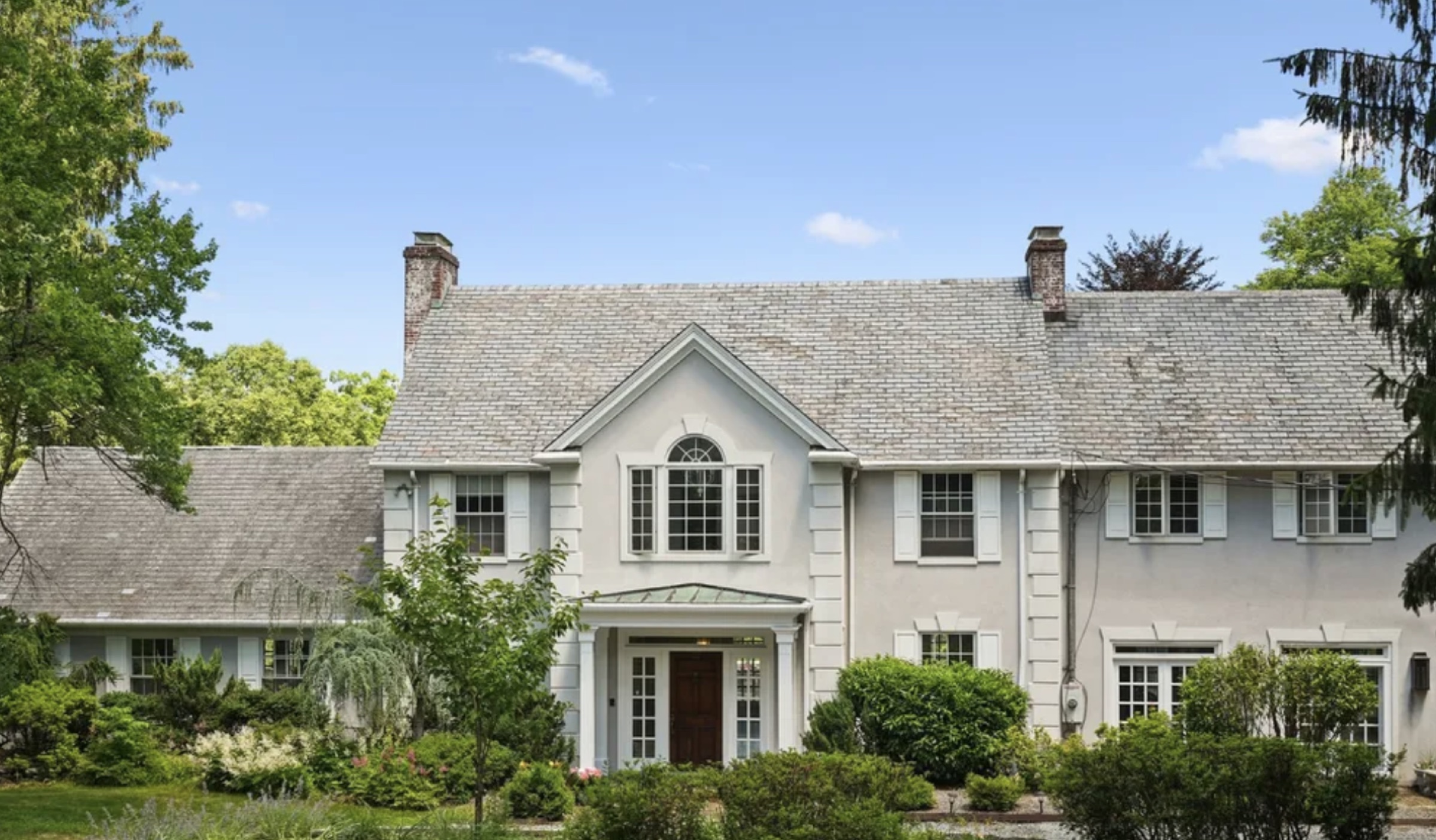
An exterior project is one of two things, and naming which one you are doing saves a great deal of confusion later. Either it is a facelift — door, lighting, paint, plantings, the things that change how a house reads without changing its shape — or it is a real elevation change, where cedar goes on, a roofline moves, a porch appears and the house stops being the house it was.
Both are worth doing. They just have nothing in common: one is a few weeks and no permits, the other is drawings, approvals and a build. What follows is how we think about each, and what we reach for most.
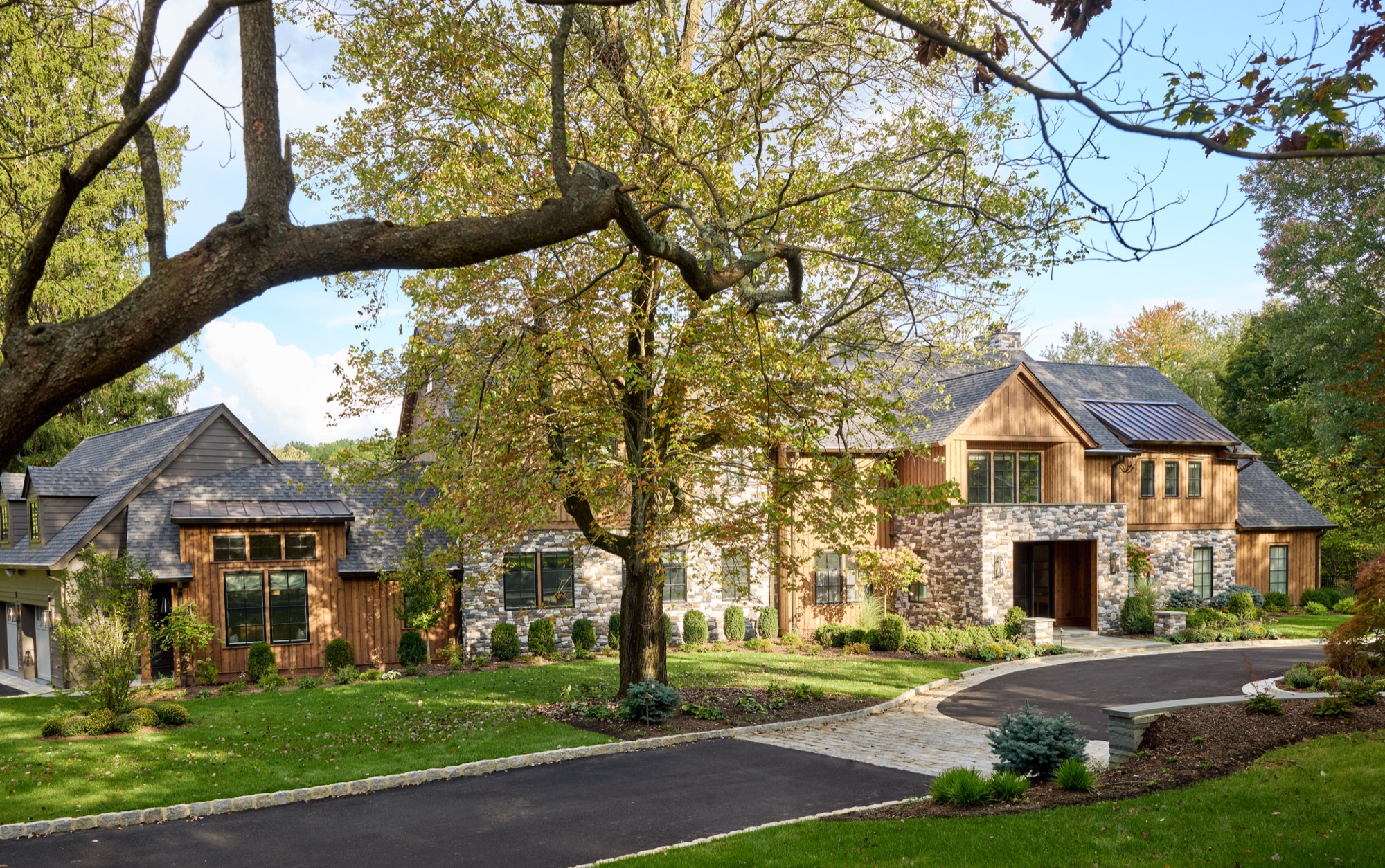
The front elevation, Mendham
Symmetry first, then break it once
The eye reads balance before it reads anything else, so the first pass on any elevation is lining things up: door centered on what sits above it, lanterns matched and at the same height, windows in rhythm, garage doors equal. Most houses that feel wrong are only slightly out of alignment, and nobody can say why.
Then break the symmetry once, on purpose. A cedar-clad gable on one side, a taller window over the stair, a single chimney. One deliberate asymmetry in an otherwise balanced elevation is what keeps a house from looking like a rendering of a house.
Cedar is the accent that does the most work
If we could only add one material to a tired elevation it would be cedar. It is warm against brick, stone, stucco and paint alike; it reads as intentional rather than applied; and it is the rare exterior material that improves as it weathers instead of merely surviving.
Where we use it: a gable or two, a porch ceiling, the surround on a garage opening, a trellis. Rarely the whole house unless the architecture asks for it. Cedar everywhere is a look; cedar in three considered places is design.
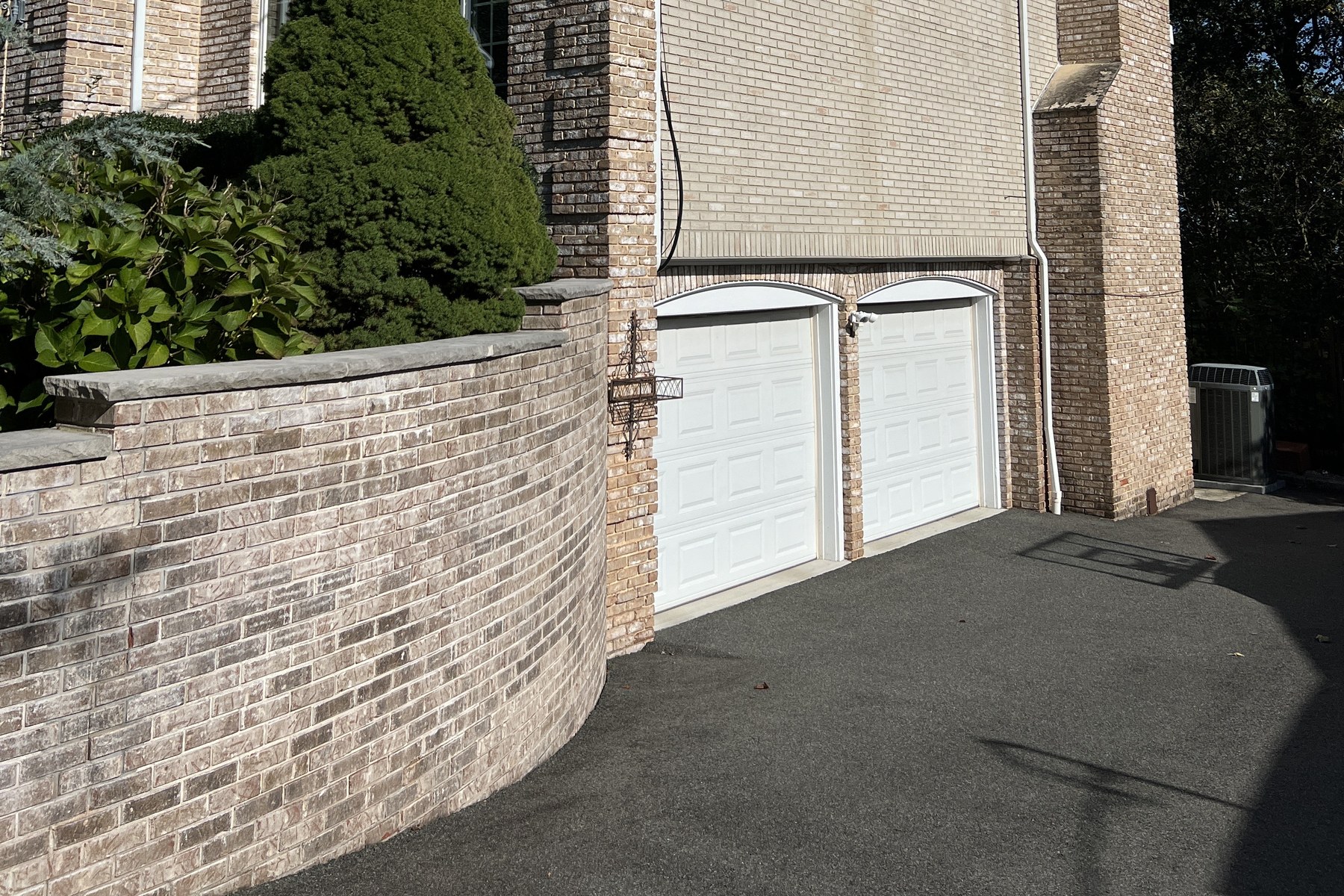
The garage and drive, Mountainside
Trellises and pergolas: architecture without moving a wall
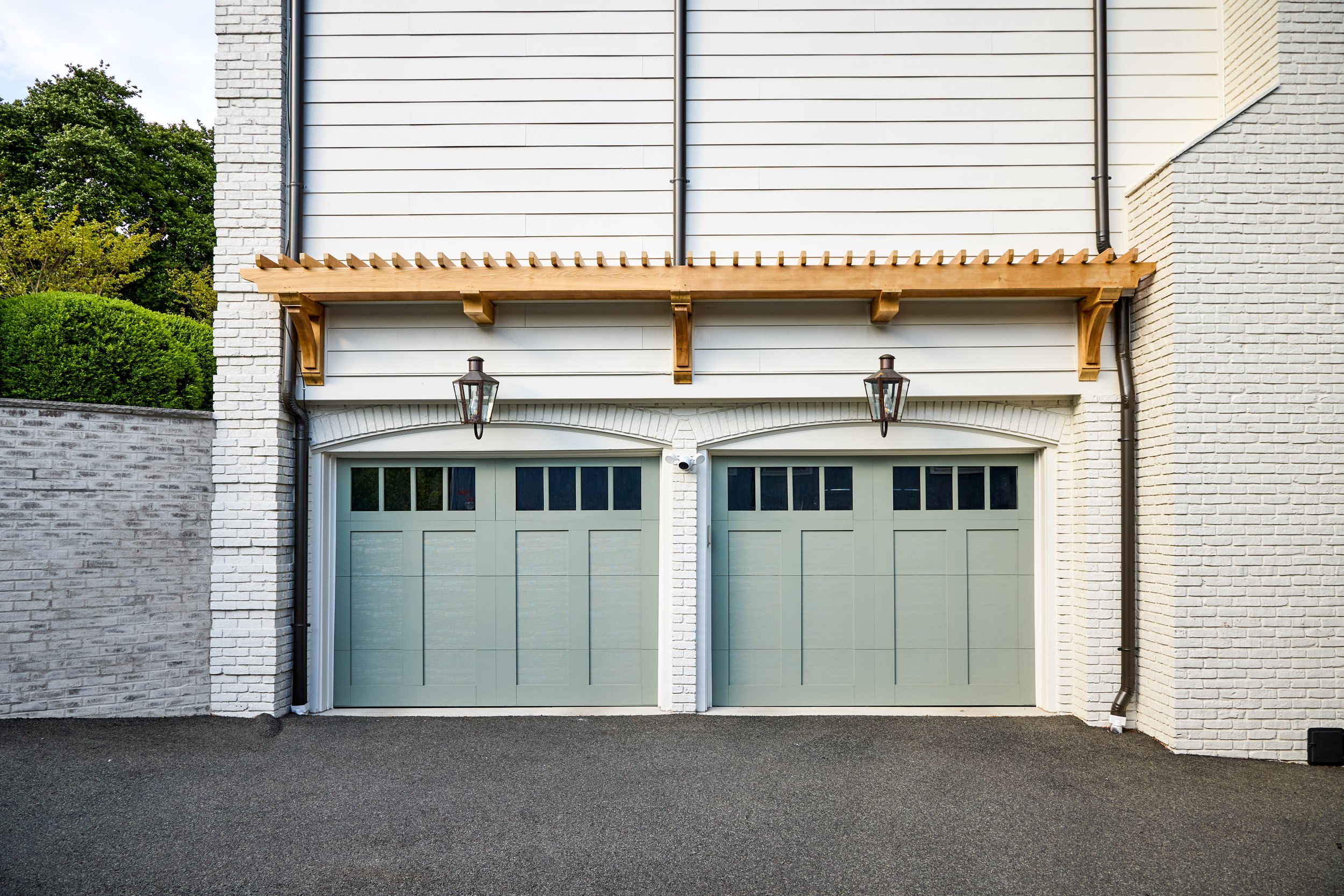
This is the most under-used move in residential exteriors. A trellis over a garage opening, a pergola across a blank stretch of wall, a bracketed overhang above a side door — each gives a flat elevation depth and shadow, which is most of what makes a facade interesting, and none of it requires structural work.
They also fix problems. A blank two-story wall gets a horizontal line to break it. A garage that dominates the front gets something above it to look at. And a pergola over a patio turns an unused slab into a room, which is the cheapest square footage you will ever add.
Three colors, not seven
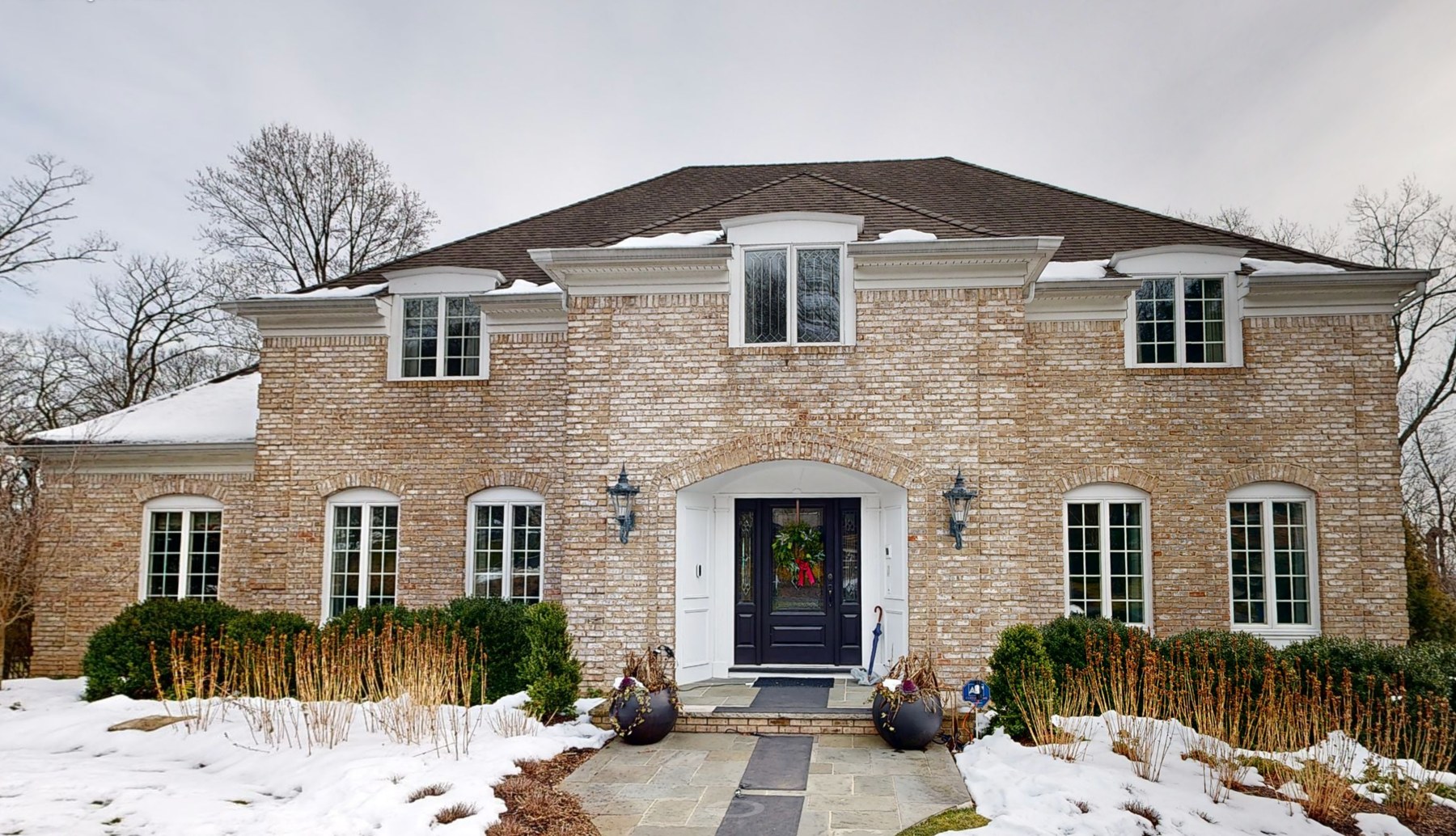
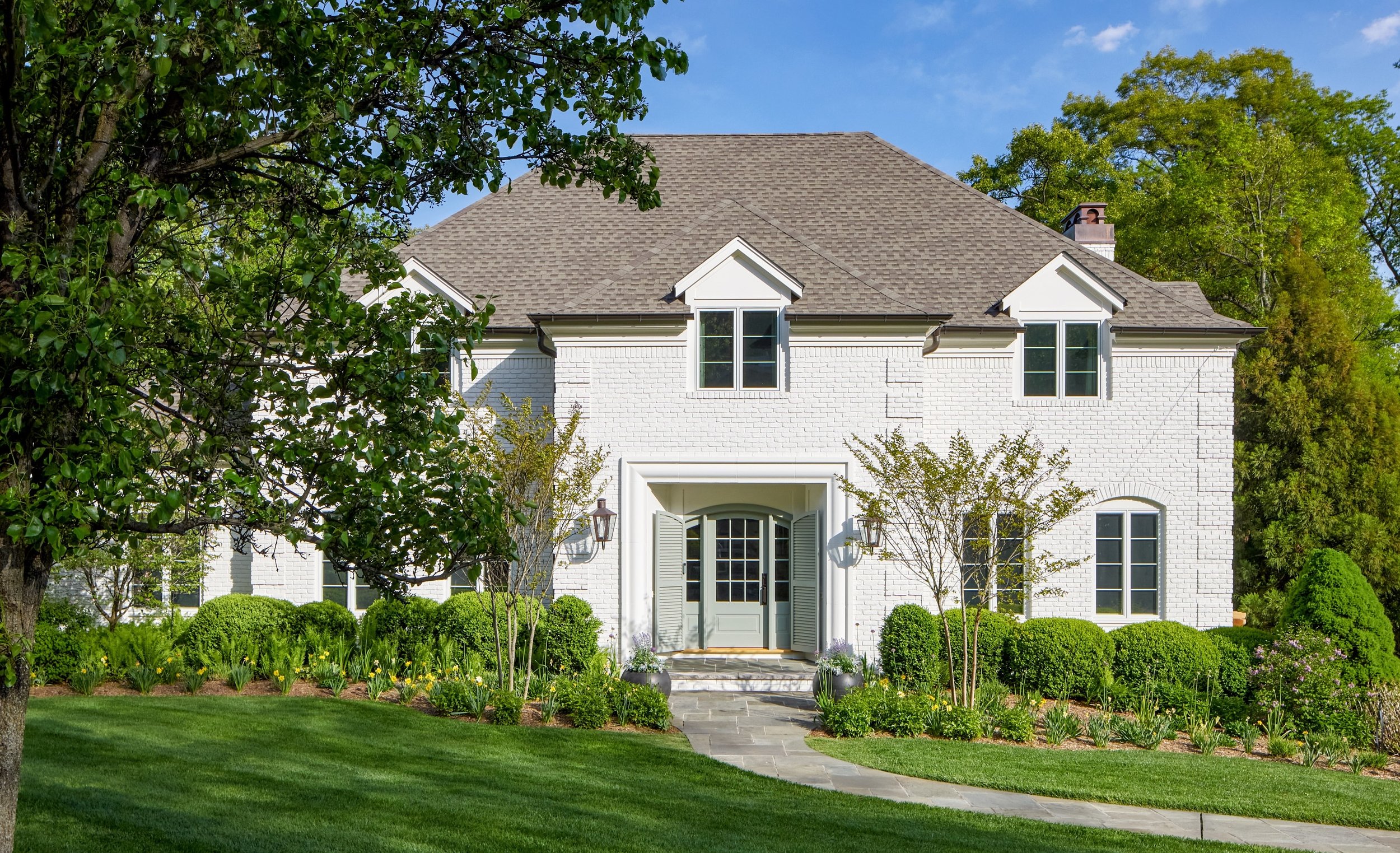
A palette is body, trim and accent. That is it. The roof is a fourth color you did not choose and cannot easily change, so every other decision gets made against it — which is why we start there rather than with a paint fan.
The accent is the front door, and sometimes the shutters or garage doors. Sage, deep green, navy, oxblood, black. Pick it against the roof and the siding rather than against whatever is having a moment, because the roof is staying for twenty years and the moment is not.
The front elevation, Mountainside
The back of the house is a facade too
Outdoor living has quietly become half of what an exterior project is. A covered porch with a real ceiling, an outdoor fireplace, a grill run that is not a cart on a lawn — these are elevations in their own right, and they are the ones the family actually looks at.
We design the rear the same way as the front: symmetry, one accent material, lighting that works at dusk, and a floor that continues the material language rather than starting a new one.
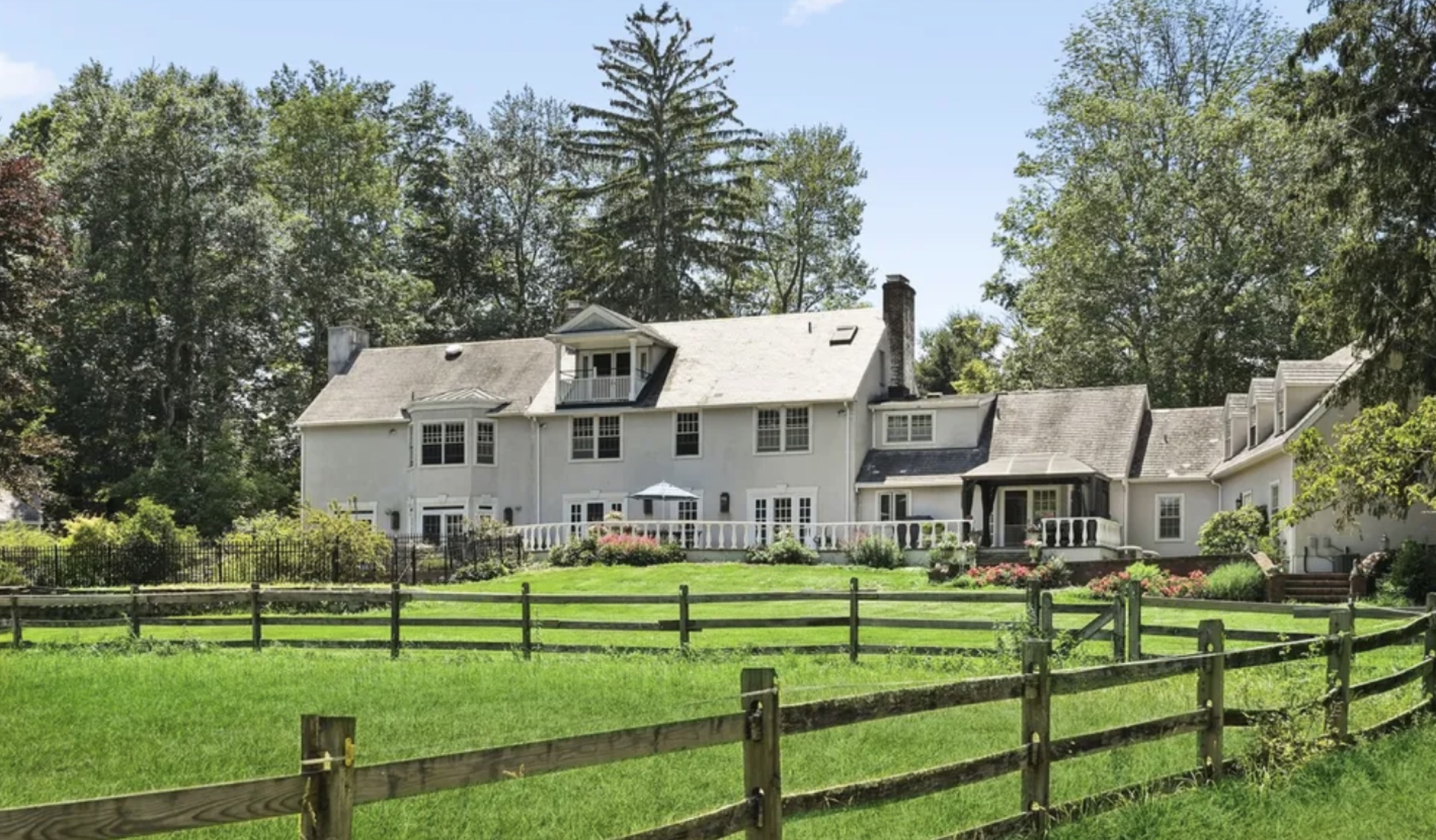
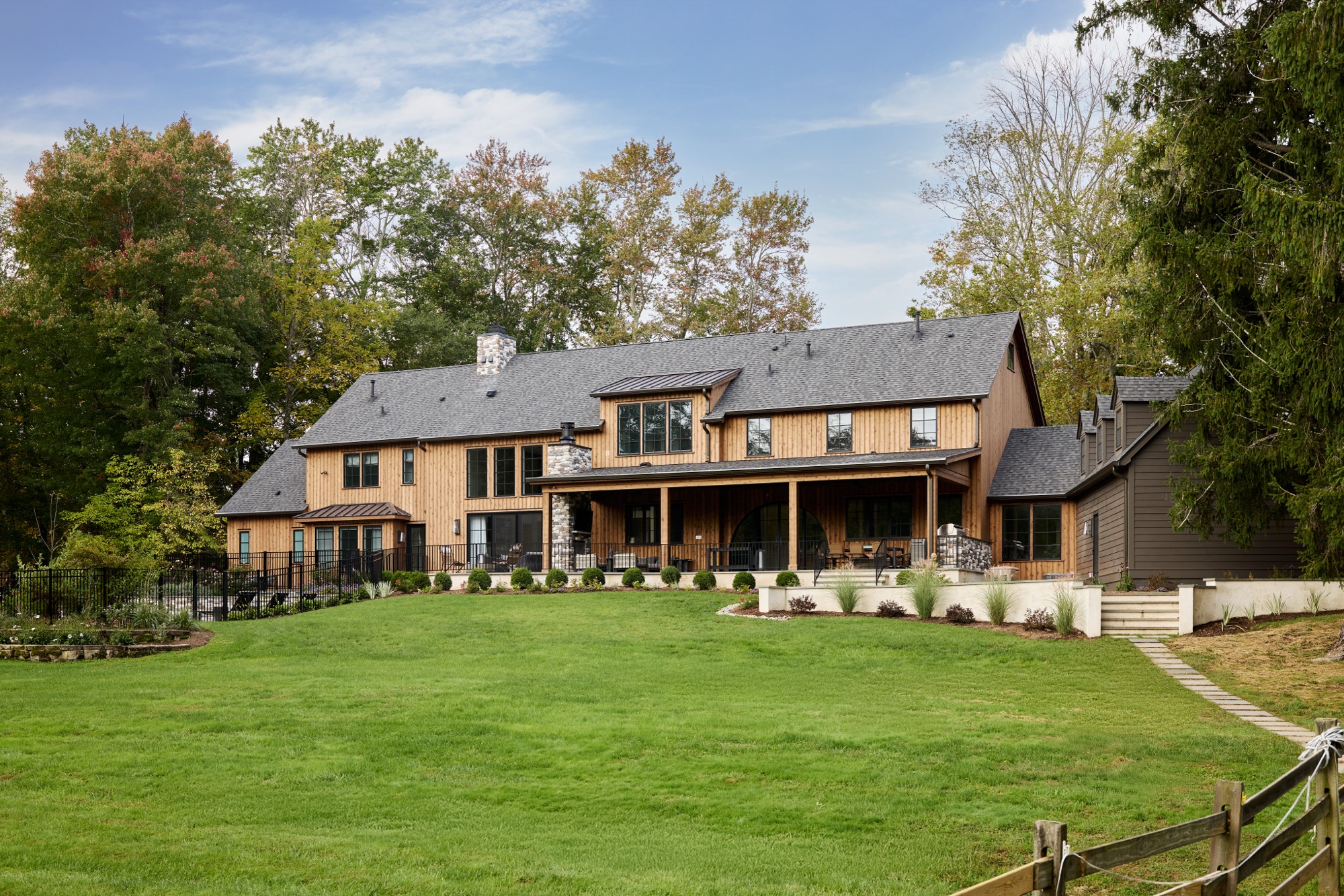
The rear elevation, Mendham
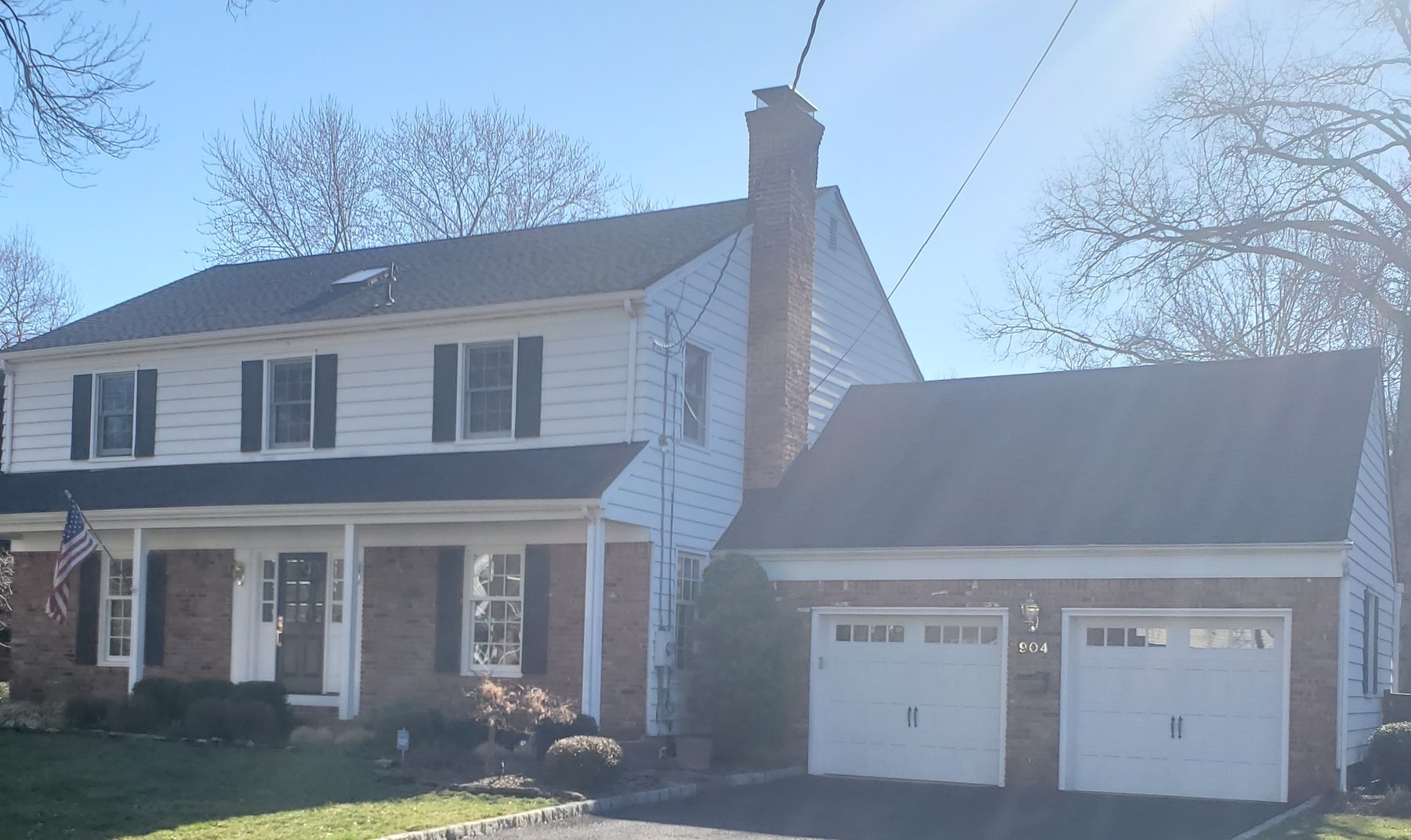
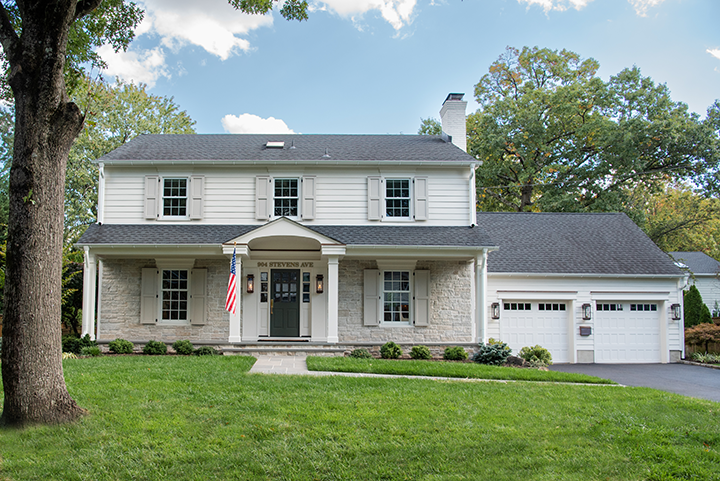
The front elevation, Westfield
All the lil' things
Most of the difference lives here, and almost none of the budget does. Address numbers in a real typeface, sized to be read from a moving car and mounted where a delivery driver looks. Lanterns a size larger than feels right in the shop. A mailbox chosen rather than inherited. Door hardware you are glad to touch. Planters heavy enough to survive a Jersey February.
Then the unglamorous half, which nobody photographs and everybody sees: where the bins live, where the hose goes, and what the utility meter is doing in the middle of the front elevation. Screening those is worth more than another shrub.
Concept to completion, one team
Exteriors are where a split between designer and builder shows most, because the decisions are structural and aesthetic at the same moment. A trellis has to be framed. Cedar has to be detailed at the corners. A new roofline needs drawings before it needs a carpenter.
Through MRCxEMD the drawings, the renderings and the build are one conversation: you see the elevation before ground is broken, and the people who drew it are the people on site. The Mendham house above went from stucco colonial to cedar and stone that way, and the whole project is here. The Westfield elevation is Fresh Meets Timeless, and the Mountainside garage belongs to Classic Curb Appeal.
More exterior work in Mountainside, Summit and Westfield — or start a project, and bring the photographs of the house you keep meaning to do something about.