

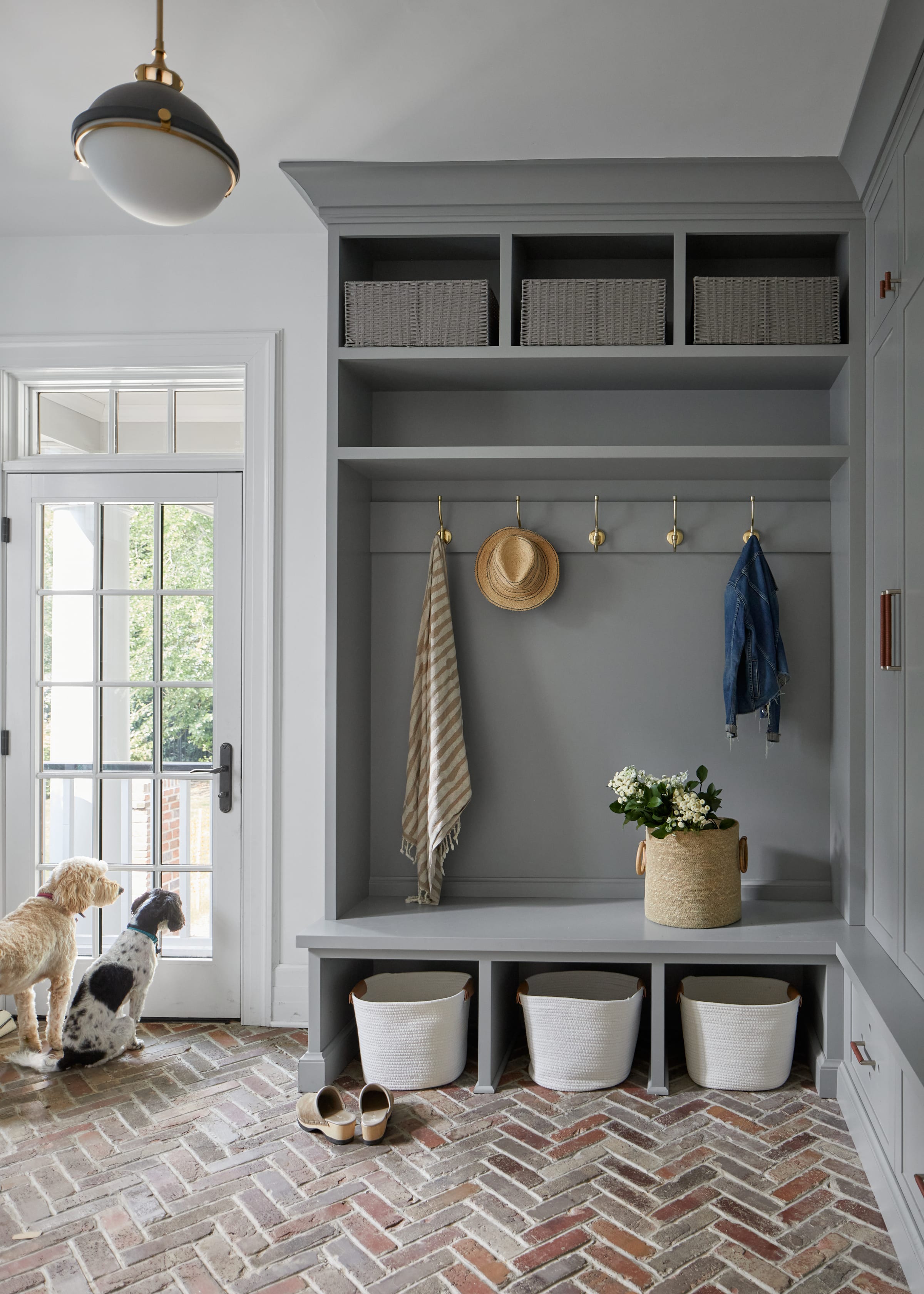
The rule we design by for family houses in New Jersey: choose the material for the traffic it will take, then make it beautiful. Not the other way round. A herringbone brick mudroom floor gets specified because it survives boots, dogs and February — the fact that it looks wonderful is the second reason, not the first.
Here is what that produces, room by room, in the houses we furnish across Westfield and the surrounding towns.
Floors that take the winter
New Jersey floors deal with road salt, wet leaves, snowmelt and sand, often in the same week. Brick and porcelain tile handle all of it and hide the evidence between cleanings. Honed stone works well; polished stone in an entry is a slipping hazard the moment someone walks in with wet shoes.
For wood, the species and the finish matter more than the color. White oak is harder than most alternatives and takes a matte finish that disguises scratching; a high-gloss finish will show every scuff a dog produces. Wide planks show fewer seams to trap grit. If you have a large dog, expect the floor to acquire character, and choose a finish that can be spot-repaired rather than one that requires refinishing the whole room.
Fabrics that earn their keep
Performance textiles have improved enough that the old trade-off is largely gone. Solution-dyed acrylics and the better performance weaves resist staining and clean up with water, and they no longer feel like outdoor furniture. We specify them routinely on the pieces that take daily use — the family room sectional, the kitchen banquette, dining chairs.
Leather is the other reliable answer, because it improves with wear rather than degrading. Two more practical notes: patterned and textured fabrics hide far more than flat solids, and a slipcovered piece that can go in a washing machine solves a problem that no fabric technology fully solves.
Rugs follow the same logic. Wool is naturally stain-resistant and resilient underfoot. A patterned rug in a room where children eat is doing structural work.
The rooms that decide whether a house works
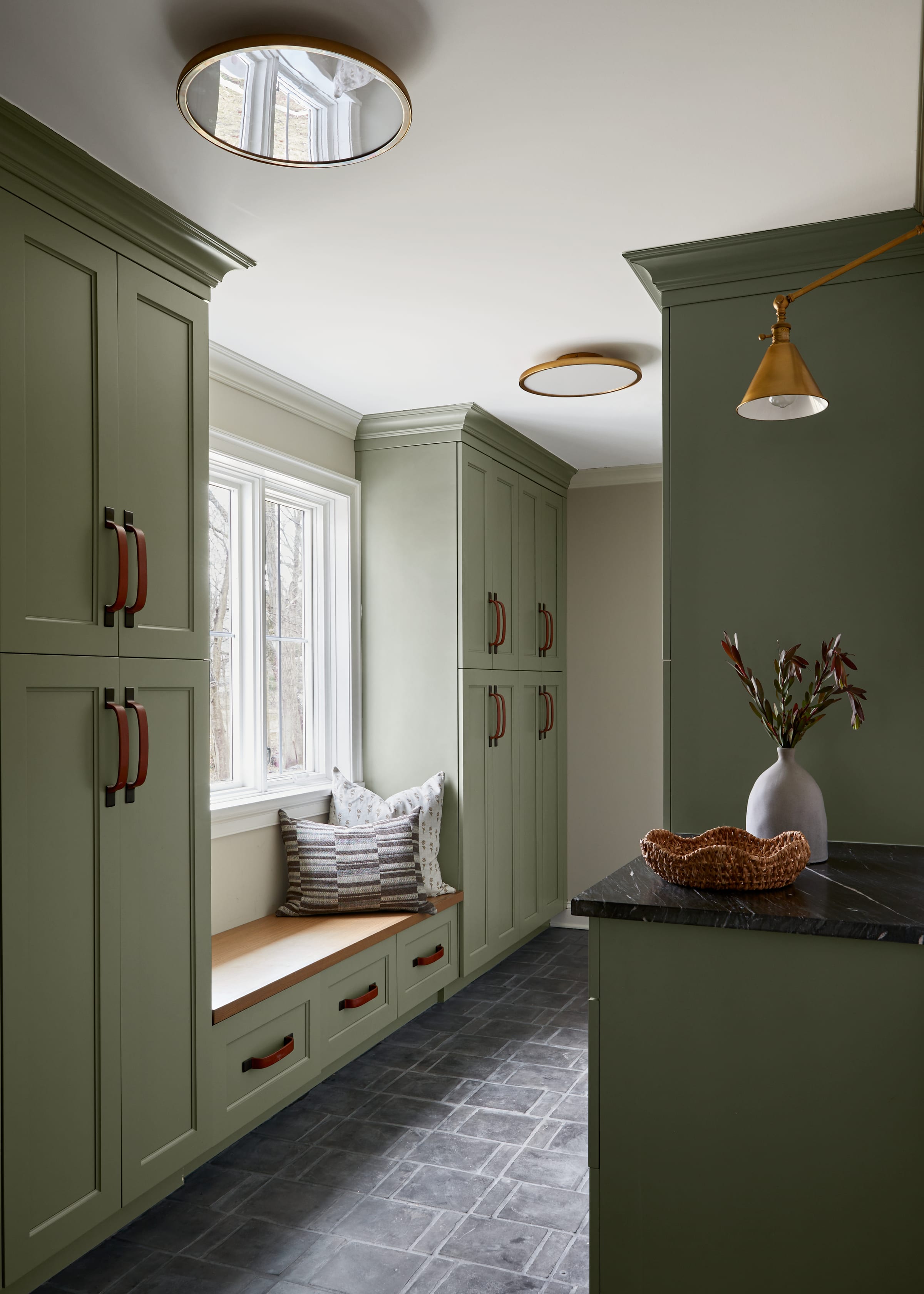
Mudrooms, laundry rooms and back halls carry the load in a family house, and they reward real investment. Custom built-in storage running the length of a mudroom, a hook at child height and a bench with drawers underneath will change a household's mornings more than any decision made in a formal living room.
A dog wash is the detail people remember from the Dudley project — tiled, plumbed, at the right height, and set directly on the path in from outside. It takes a genuinely unglamorous daily routine and gives it a proper place in the house. That is what luxury residential design looks like day to day: the rooms that make a house pleasant to live in are frequently the ones nobody thinks to put on a plan.
Finishes and hardware
Matte and brushed finishes hide fingerprints; polished chrome and high-gloss lacquer display them. On cabinetry in a family kitchen, a satin or matte paint cleans better than a flat one and shows less traffic than a full gloss.
Unlacquered brass is worth understanding before you commit. It will patina — unevenly, according to which parts get touched — and that is the entire point of it. Homeowners who want brass to stay bright should specify a lacquered finish instead. This is a decision to make deliberately rather than to discover in year two.
What we do not compromise on
Durability is a specification, not an aesthetic. It does not mean dark colors, and it does not mean choosing the sturdy version of everything. The rooms that see the least traffic — a primary bedroom, a formal dining room, a guest suite — can carry the delicate silk, the pale rug and the antique. Concentrate the hard-working materials where the wear actually happens, and the house keeps both its manners and its nerve.
The other thing we hold to: nothing gets specified that the household will be afraid of. A room you tiptoe through has failed, however well it photographs.
If you are furnishing a house that has to absorb real family life, that is most of what we do. See how it resolves in our full-service furnishings work, or start a project and tell us about the dog.