

Nobody renovates four times a year, and nobody should. But there is a version of changing your house that costs a fraction of a room and takes an afternoon, and it is the most underrated pleasure of owning a home: swapping the small layer out with the season.
This is not about a scarecrow on the porch. It is about the fact that the throw that looks right in February looks heavy in May, that a bowl of lemons does something to a kitchen in July that it cannot do in November, and that a house which changes slightly through the year feels lived in rather than installed.
Edit before you buy a single thing
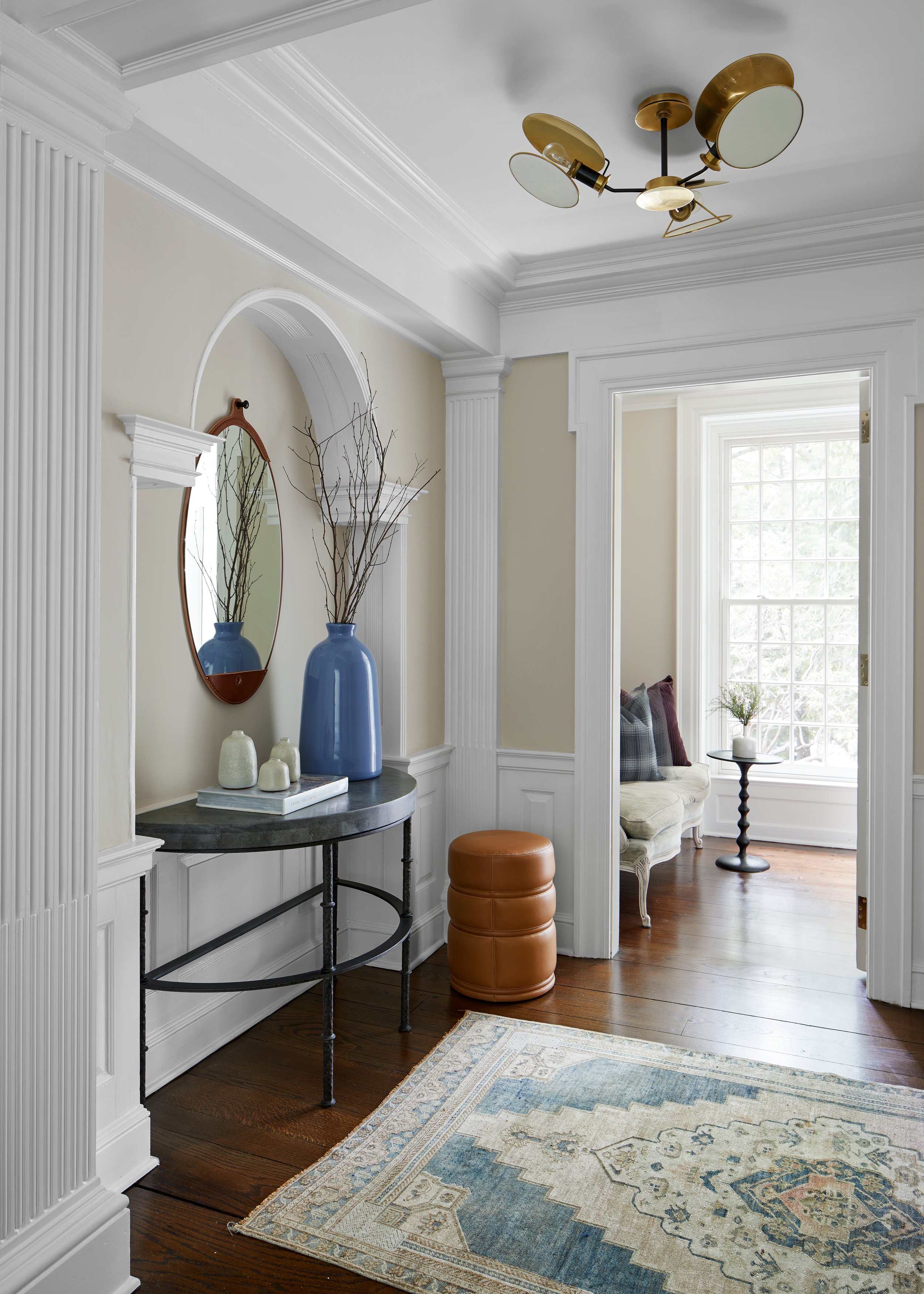
The instinct is to add. The move that actually works is to take away first. Clear the console, the coffee table and the mantel completely — everything off, down to the surface — and then put back only what you genuinely want to look at. Most rooms come back together with about two-thirds of what was on them.
What is left over tells you what to shop for, and it is almost never what you thought. You will find you have eleven candlesticks and nothing with any height to it, or six small objects and no bowl big enough to anchor a table. Shopping after the edit is cheaper and far more accurate than shopping before it.
Four things change. Everything else stays put.
Seasonal decorating goes wrong when people try to change the room. The room is not the variable. Furniture, rugs, drapery, lighting and art are the permanent layer — they were chosen to work in every month of the year and they should not move.
What changes is a short list: the textiles (pillow covers and throws), the tabletop (linens, candles, the centerpiece), the entry (the one surface every guest sees first), and what is growing or cut. Four categories, and the last one is free if you have a yard.
Keep that discipline and the whole exercise stays small, storable and reversible. Abandon it and you are buying a second set of furniture.
Fall: the easiest season to get right
New Jersey does autumn extremely well — in Westfield the first real cold snap usually lands before anyone has found the throws — and the house only has to meet it halfway. Swap cotton and linen pillow covers for wool, velvet or a heavier weave — covers, not whole pillows, so the inserts stay and the bin stays small. Add a throw with actual weight to it on the sofa and one at the foot of the bed. Move the palette a few degrees warmer rather than wholesale: rust, ochre, olive and chocolate against whatever neutral the room already is.
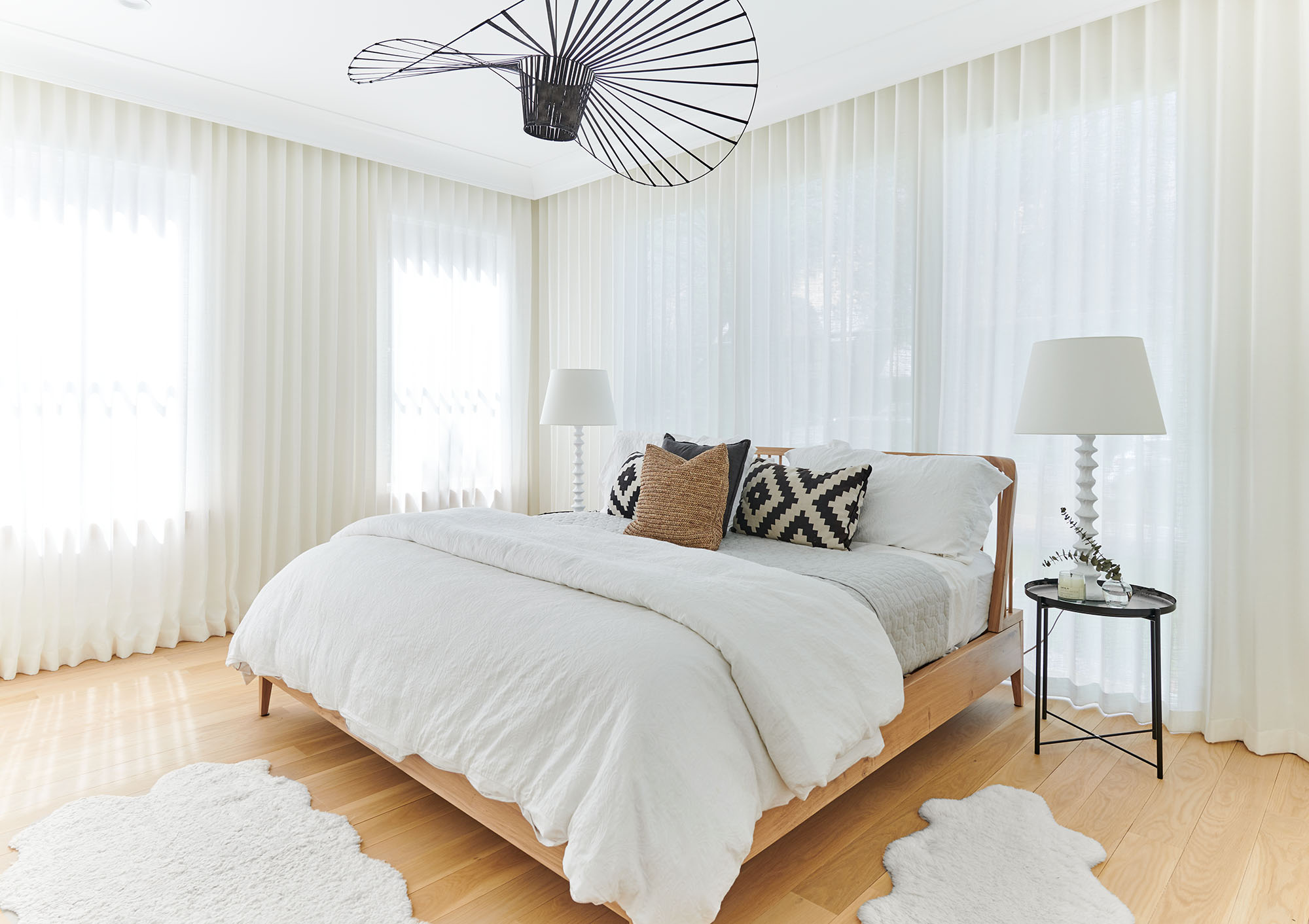
The guest room is the fall project worth doing, because this is the season it starts getting used. A heavier duvet, a folded blanket at the foot, a reading light that actually works and a carafe on the nightstand will do more for a visitor than anything structural.
Winter: lean on light, not on red and green
The holidays are three weeks of the winter. The other ten weeks are dark by five o'clock, and that is the actual design problem. Add light at low levels — a lamp on the kitchen counter, a small one in the powder room, candles that are lit rather than decorative. The mantel is the one surface worth real attention in winter, because it is where the eye goes in a room with a fire in it.
For the holidays themselves: greenery, metal and candlelight travel far better than anything themed, they photograph beautifully, and they come down without leaving a hole in the room. A garland on the mantel, brass or mercury glass, and enough candles that somebody comments.
Spring: take things off
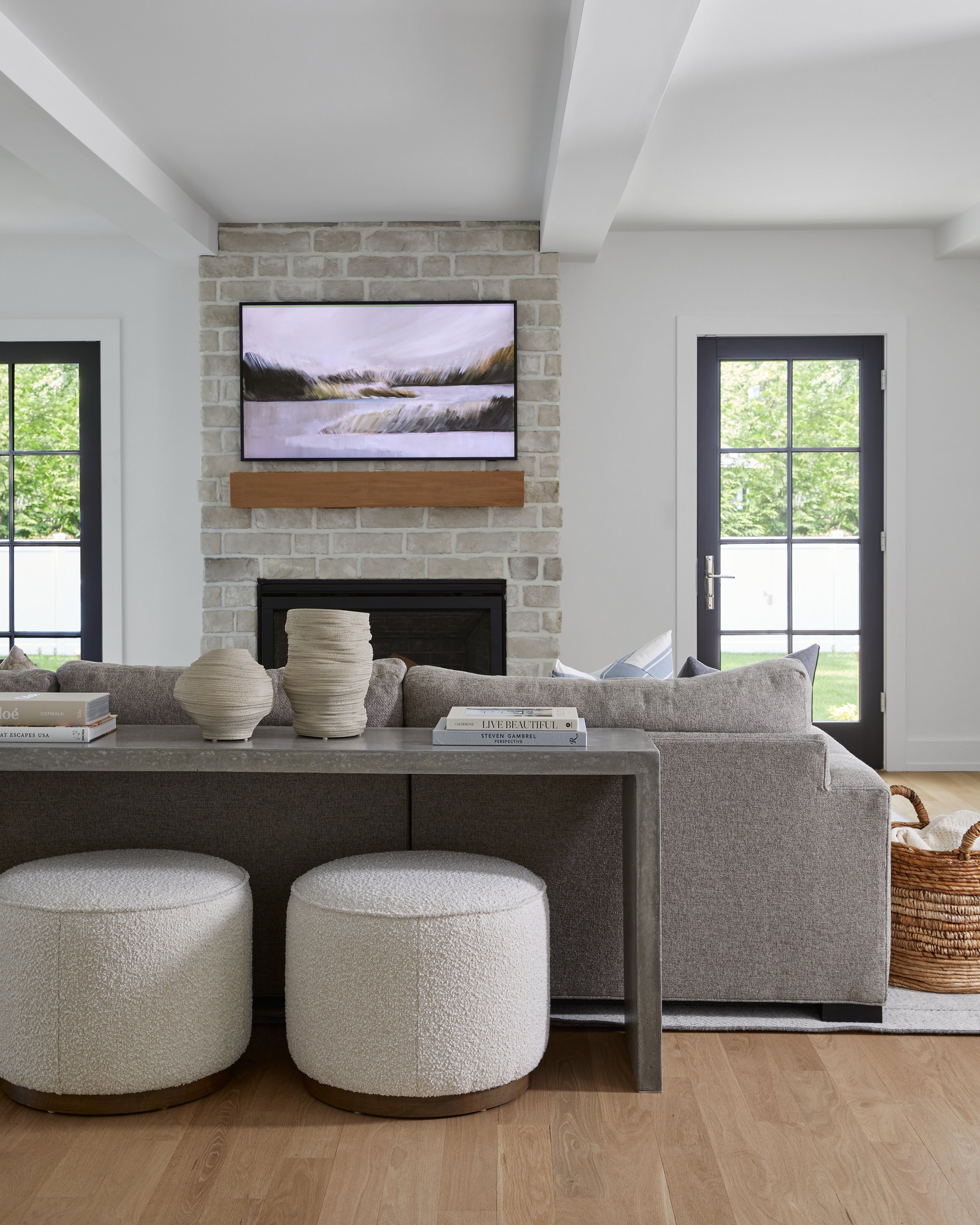
Spring is the subtraction season, and it is the one most people skip. The heavy throws go back in the bin, the wool covers come off, the layered look thins out on purpose. Wash the windows, then wash the sheers — a room gets noticeably brighter from clean glass before anything is bought.
Then one bold, cheerful thing: a printed pillow, a green-glazed bowl, a single stem of something ridiculous in the entry. After a New Jersey winter the house is allowed to be a little loud.
Summer: the house should look like it is not trying
Lighter, fewer, looser. Cotton and linen everywhere they can go, the rug in the entry swapped for something you do not mind wet feet on, bare surfaces left bare. Summer is the season to move the entertaining outdoors and let the inside go quiet.
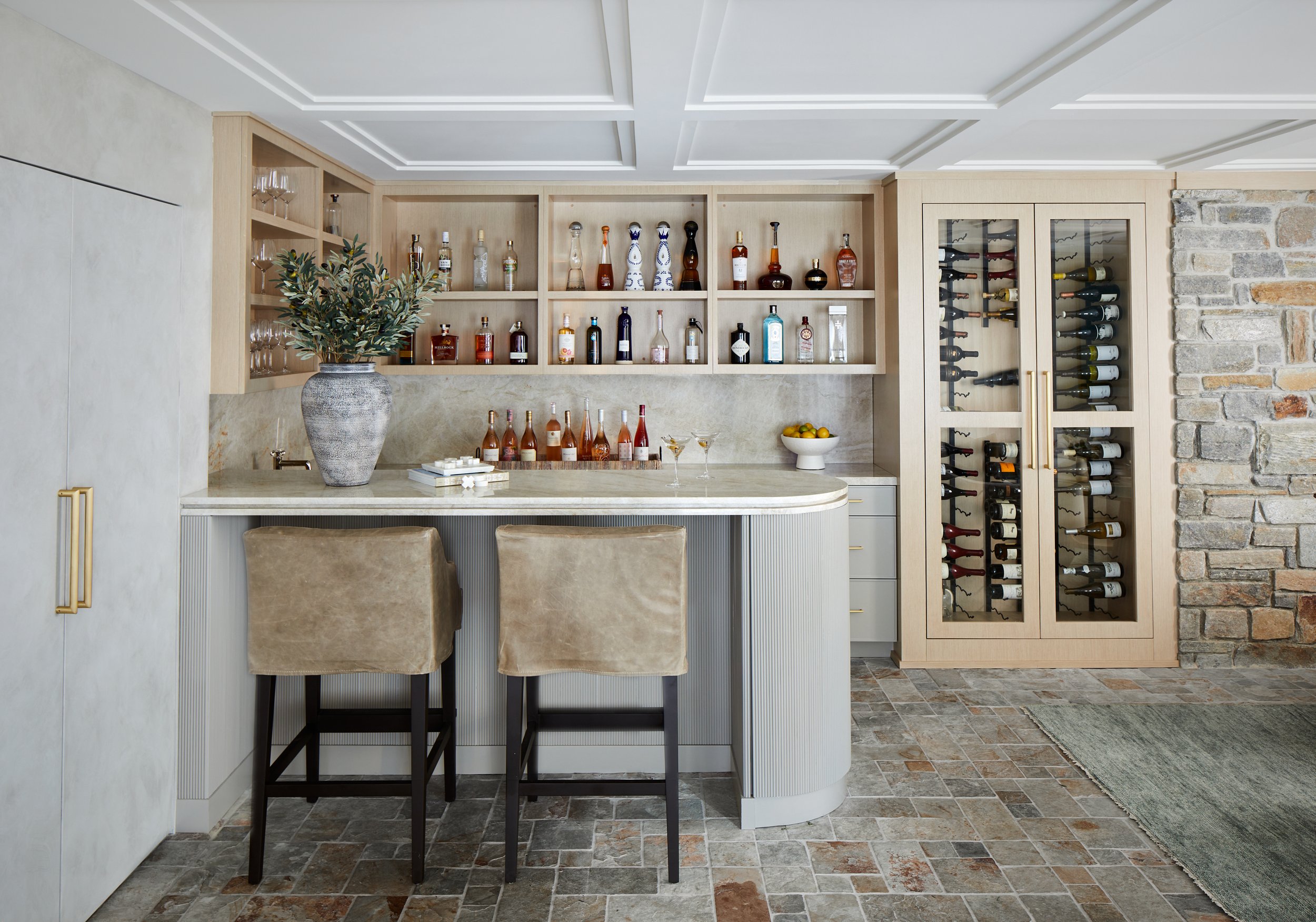
The bar and the table are where summer effort belongs. A tray that corrals the bottles, glassware you are not frightened of, a pitcher that lives on the counter from June to September. This is the least expensive hosting upgrade there is.
The table is the fastest change in the house
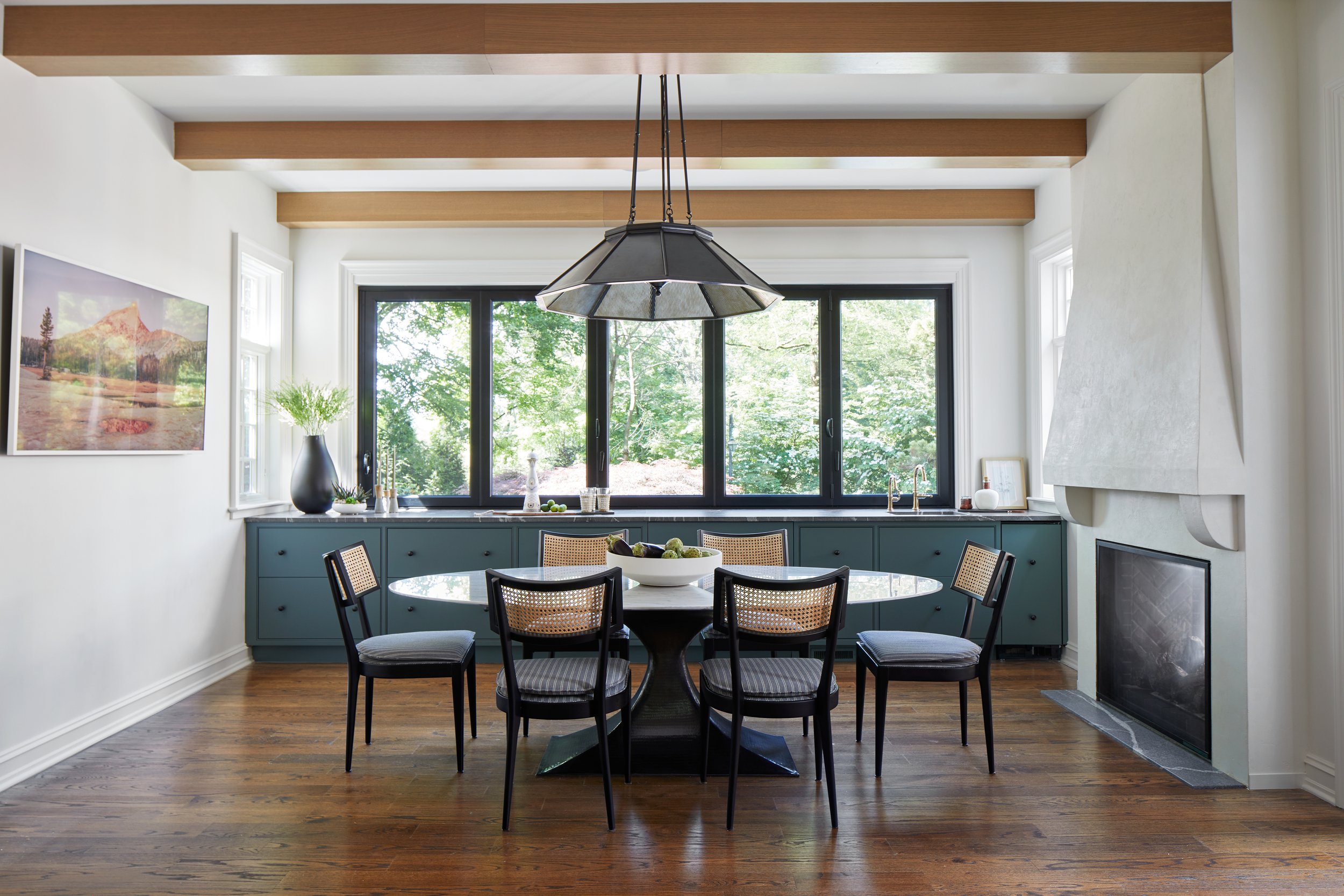
Every season has a version of the same dinner, and the table is where the swap reads hardest for the least money. Linens, candles, and one thing in the middle that is alive — branches in the fall, greenery in December, tulips in April, whatever is overgrown in the garden in July.
Two rules. Keep the centerpiece low enough to see over, because a table nobody can talk across is a beautiful failure. And use the good things. A cabinet of glassware saved for an occasion that never quite arrives is the saddest storage in the house.
One bin, one photograph
The reason seasonal accessorizing falls apart in year two is storage. Use one labeled bin per season — if it does not close, you have too much, which is useful information. Pillow covers rather than pillows is the single biggest space saver, and the reason we specify covers in the first place.
And take a photograph of the room when it looks right. Next October you will not remember which way the mantel was arranged, and the picture on your phone will take twenty minutes off the job. It is the closest thing to a professional trick in this entire article.
Yes, it is retail therapy. It is also good for the house.
There is a quiet snobbery about seasonal decorating that we would like to leave behind. Buying three pillow covers and a bowl because the light has changed and you feel like it is not a failure of taste. It is one of the genuine pleasures of owning a home — a small, affordable, entirely reversible way to enjoy the thing you worked for.
Pride of ownership is not a marketing phrase. It is the reason people notice a house feels cared for, and it usually comes down to somebody bothering with the small layer. A house where someone changes the mantel four times a year is a house that is being paid attention to, and you can feel it walking in.
So do it badly at first. Buy the thing that makes you happy, put it on the table, and move it three times until it looks right. That is the whole method, and it is the same one we use.
Where to shop it
Ellie keeps a running shop of the home pieces we actually buy and specify — trays, vases, lighting, bedding, glassware and the seasonal edits above — in her ShopMy shop. The shop page here pulls the current collections automatically, so it is the fastest way to see what is new.
Some links in this post go to Ellie's ShopMy shop, where a purchase may earn the studio a small commission at no additional cost to you. We only link to things we would put in a client's house.
If the small layer is the part you would rather hand over entirely, that is the last stage of full-service furnishings — and it is our favorite day of the project. Start a project, or read how the finishing layer fits into a whole room in making a home feel collected, not decorated.