

A collected home is not an old one. It is a home where nothing arrived as a set — where the nightstands are not twins, the dining chairs did not come with the table, and no piece in the room was chosen because it shipped alongside the one next to it. That is the whole trick, and it has very little to do with age.
It is also why clients describe EMD rooms as livable, layered, laid-back and luxe rather than decorated. Here is how it is actually done.
Nothing in the house is a set
The seven-piece bedroom suite and the matching dining set are over, and we do not miss them. A set makes every decision in the room at once, in one finish, from one catalog — and you can see that it did. The room reads as furniture that was purchased rather than a home that was put together.
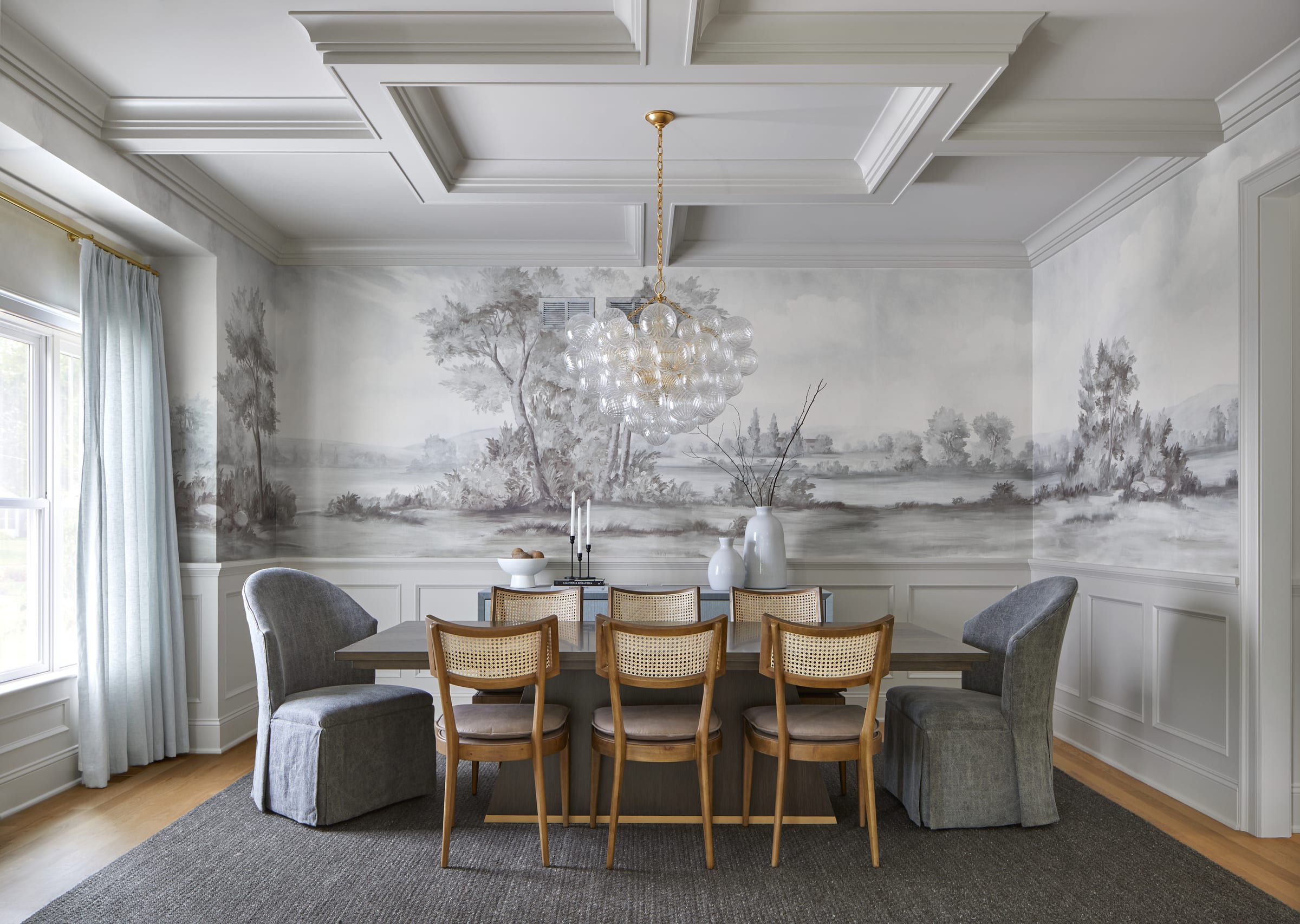
So we mix. The bed from one maker, the nightstands from another and not always a matched pair — a small chest on one side, an open table on the other, because the person who reads in bed and the person who does not need different things. A dresser in a different wood entirely. In the dining room, the table is one idea and the chairs are another, and the two at the ends are often a third.
What holds it together is not a shared product family. It is proportion, scale and a material or a tone that repeats three or four times around the room. Get those right and mismatched pieces read as considered. Get them wrong and matching pieces still read as flat.
Buy from the makers nobody on your street has found
Most of what we specify comes from boutique brands and small workrooms rather than the big catalogs — trade-only lines, regional makers, and the kind of upholsterer who will tell you how the frame is joined. It is genuinely better furniture, and it has the side benefit of not appearing in three other houses in town.
This is one of the real, unglamorous advantages of hiring a designer. The access is half of it. Knowing which of those makers is worth the lead time is the other half.
Then customize it until it exists once
A boutique piece still comes in a standard version, and the standard version is where we start rather than where we stop. We send our own fabric to the workroom. We change the leg, the finish, the arm, the depth of the seat. We build the sofa to the inch the wall actually is instead of the inch the catalog offers, and we have the drapery made for the window rather than cut to fit it.
Customization is the fastest route to a room that cannot be repeated, and it is available on far more pieces than most homeowners realize.
Vary the texture more than the color
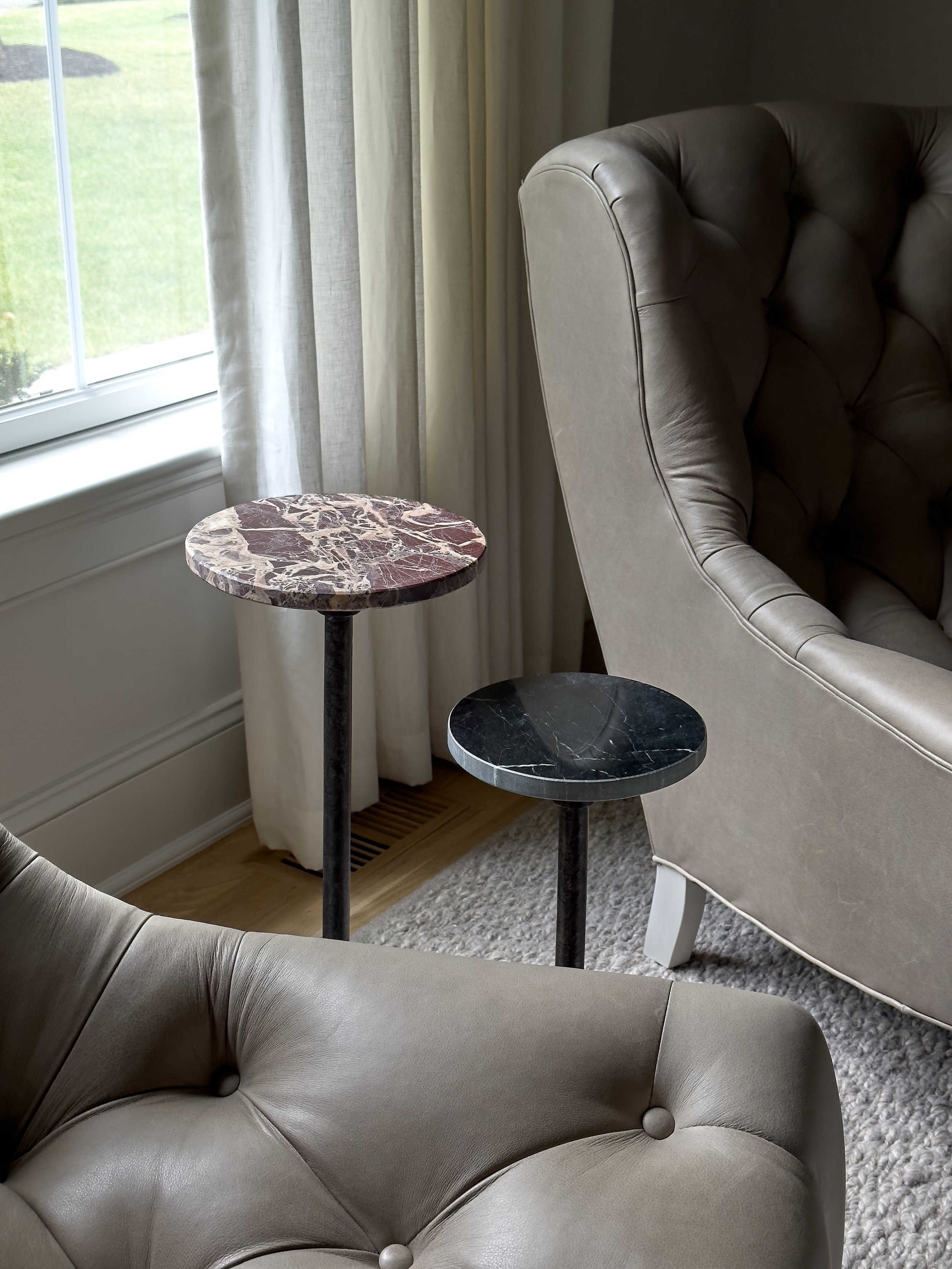
Restraint with color, generosity with texture. That is why a neutral room can be anything but plain: a boucle chair beside a leather ottoman, a woven shade against plaster, a marble top on a wood pedestal, a jute rug under a linen skirt. Five materials in one quiet palette will out-perform five colors every time, and they will still be right in ten years.
Put something on the walls that is not furniture
Art, and not art chosen to match the sofa. It is the single most common gap in a house that otherwise has everything. In a Chatham dining room the walls carry a hand-painted mural and the cane-back chairs in front of it are quiet by comparison — the room has one thing to say and says it on the wall.
Light it in layers, and never only from above
One ceiling fixture is a hallway solution applied to a living room. A room that feels good at night has three or four sources at different heights — a chandelier, a pair of lamps, a sconce, something low. Lighting is also the element clients most often under-plan and most often notice once it is right.
Accessorize all at once, on purpose
Here is where we part company with the usual advice. We do not send clients off to gather objects slowly over the years. We style the room in one pass — the throws, the trays, the bowls, the books, the objects on the console, the art on the walls — and we do it the way the room was drawn.
The reason is simple: a room that is ninety percent finished does not read as ninety percent finished. It reads as unfinished, and it will sit that way for a year while everybody waits for inspiration to strike at a market. The layers are what make the room look like a home rather than a furniture delivery, and they work best when they were planned with everything else.
What keeps a full install from looking like a showroom is not how long it took. It is that the pieces underneath it were never a set, and that a real share of what goes on the shelves is yours — the books you have actually read, the bowl from the trip, the photographs in good frames. Budget for this layer from the beginning; it is the one that gets cut, and the one you notice missing.
Dress the windows
Nothing says unfinished like bare windows in a finished room. Drapery softens a hard architectural edge, adds height when hung well, and gives a room its last soft surface. It is also the line most often cut from a budget and most regretted.
Nothing precious, nothing hotel
There are two ways a beautiful room goes wrong, and they are opposites. Precious is the room you tiptoe through, where the fabric cannot take a glass of red and nobody sits down. Hotel is the room that is perfectly coordinated, perfectly inoffensive and tells you nothing whatsoever about the people who live there.
Matching sets march you toward the hotel end. Fragile, fussy pieces march you toward the precious end. The room worth having sits between them: unmistakably tailored, and completely unbothered by a dog on the sofa.
Every client's version looks different
We do not have one house style that gets applied to every project. We have a point of view about proportion, material and light — that part is ours, and it is most of what you are hiring — but the perspective in the room is the client's.
Two houses on the same street in Westfield, same designers, same year, will not look like each other. One family cooks and hosts eighteen people; one wants the quietest bedroom in New Jersey. The mix, the makers and the customization all move to suit, which is exactly why a collected room cannot be bought as a package.
What this adds up to
A home that looks professionally designed does not look purchased. It looks edited — mixed rather than matched, made rather than ordered, and finished on purpose rather than left waiting. That is the difference between a house that photographs well and one that is genuinely good to live in.
See how it resolves across whole homes in our projects, or room by room in the photo galleries. If you would like this done to your own house, start a project and tell us what you already own that you cannot part with — that is usually where we begin.