

The thing that keeps people awake during a renovation is not the dust or the noise. It is the text that lands at four o'clock on a Tuesday — the tile is discontinued, the electrician needs to know tonight where the sconces go — and the suspicion that you are making a permanent decision far too quickly. Construction consulting exists to move those decisions off your phone and onto paper, months earlier, while changing your mind is still free.
That is the whole of it. We are spelling it out because the phrase "construction consulting" tells a homeowner almost nothing, and the people who need it most are usually the ones about to find out the hard way what it is for.

What actually keeps people awake
A renovation is not one big decision. It is several hundred small ones arriving in an order nobody warns you about. Which way the shower niche faces. How high the outlets sit above the counter. Whether the hood is plaster or metal. Which side the door hinges on. Individually none of them is dramatic, and that is exactly the problem — there is no moment where it feels reasonable to stop and think.
Most of them are also time-sensitive in a way that is invisible until you are standing in it. Tile gets chosen before the plumber sets the valve. Cabinetry gets drawn before the electrician runs the wire. Miss the window and the answer is a change order, which is the polite industry term for paying twice.
What construction consulting actually is
A designer working next to your builder from the planning drawings through the last piece of hardware. Not a second contractor. Not a project manager. The person deciding how things look and how they work, in step with the team putting them in.
Ours runs through MRCxEMD, our collaboration with Michael Robert Construction. MRC handles the renovation, addition or new build; we guide the design decisions that determine how the finished house looks and lives. Architecture, construction details, finishes and interiors become one conversation instead of four, which is the real luxury here — not the marble.
Decisions made on paper cost nothing to change
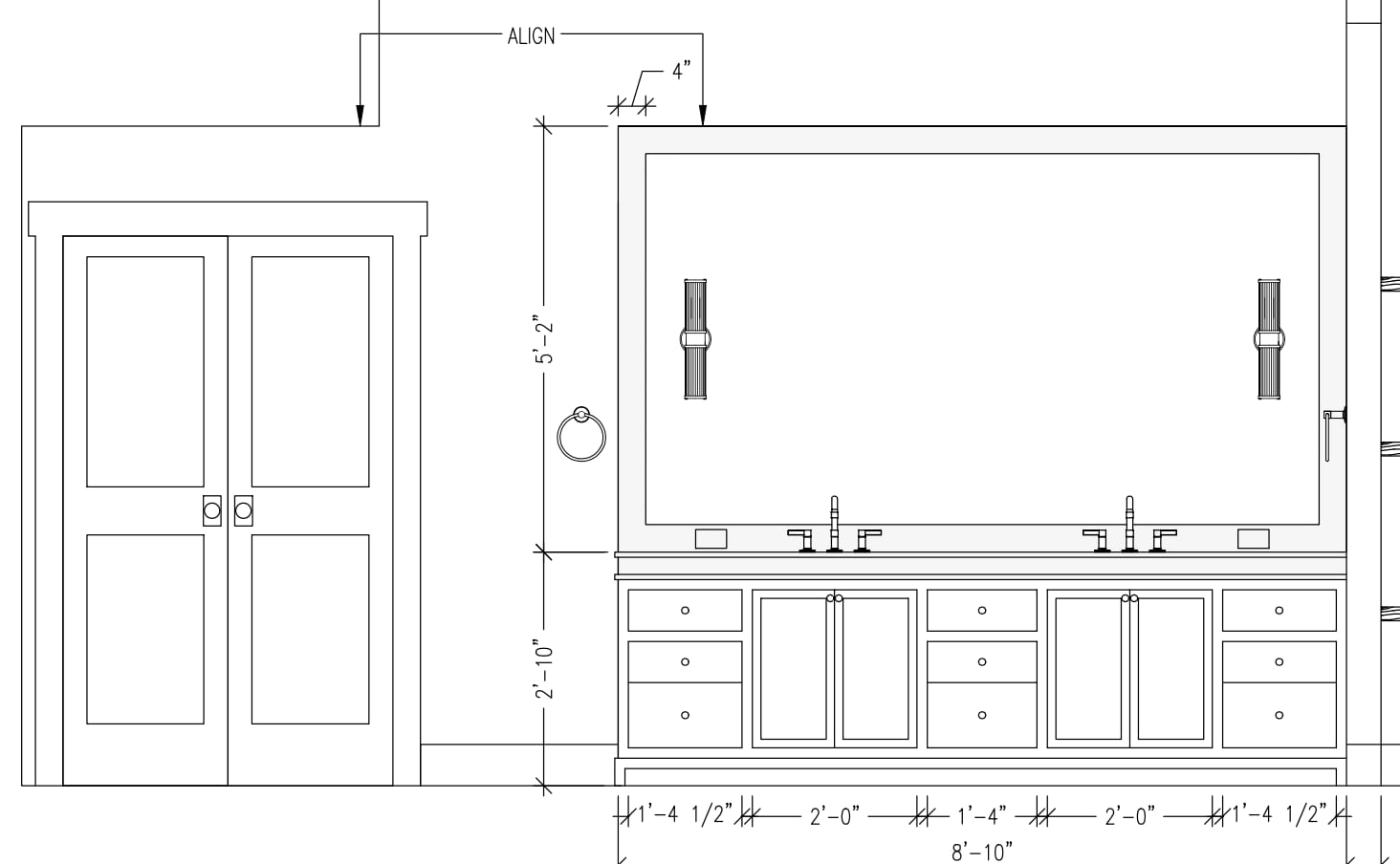
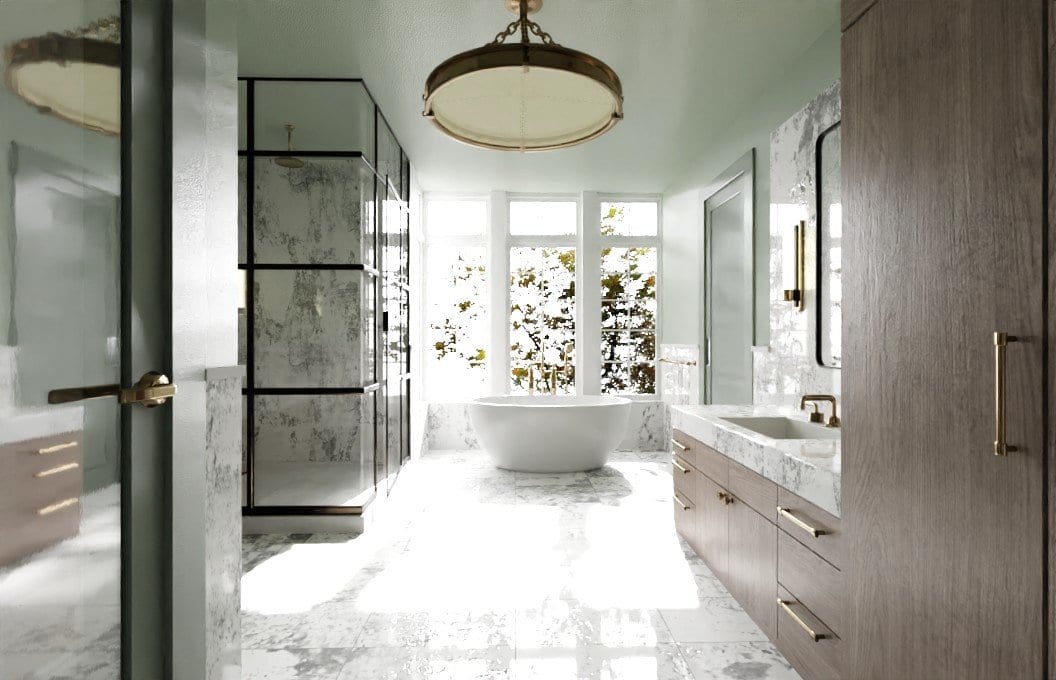
Before anything is demolished, you see it. Renderings of the rooms, elevations of the millwork and built-ins drawn to the inch, the palette resolved against the floors you already have. Moving a window on a rendering takes an afternoon. Moving it after the framing is up takes a conversation you will remember.
The order things get decided in is the trick
We work backwards from the build schedule. Selections are timed so that each one lands when the site needs it and not a week after — plumbing fixtures, tile, stone, lighting, paint, cabinetry finishes, hardware, each in its turn, presented in the studio or shopped together at vendors we trust.
The practical effect is that you are never asked to choose a faucet in a vacuum, and never asked in a hurry. You see three good options that already work with everything else, and you pick the one you like.
What you still have to do
You still have opinions, and we want them — the whole point is that the house ends up specific to you rather than to us. You show up to a handful of meetings, some in the studio, some on site as the build progresses, and you say yes or no.
What you do not do is research, chase, compare, reorder, or lie awake wondering whether the stone will read too cold against the floor. That part is ours, and it is most of the job.
When to bring a designer in
Before the drawings are final. That is the whole rule. The decisions with the longest shadow — where the windows land, how tall the ceiling is, whether there is room for the bench you will want in the mudroom — get made at the plan stage, and they get made once.
The honest promise
Nobody can make a renovation frictionless. Houses are old, weather happens, and the thing behind the wall is never what the drawings said. What a designer alongside the builder can do is make sure that almost nothing comes at you as a surprise, and that when something does, there is already a team holding an opinion about it.
That is what people mean when they say they slept through their renovation. See the process end to end on the MRCxEMD page, or look at what it produced in a 1929 kitchen and mudroom in Westfield. Then start a project — bring the wishlist, the worries and the discontinued tile.