

Rugs, window treatments and wallpaper are the three things that decide whether a room looks finished or nearly finished. They are also the three that are measured and made rather than bought off a shelf, which means each one depends on a specialist workroom or installer doing precise work. Getting them right is mostly about sequence and measurement, and only partly about taste.
Here is how that work actually runs on our projects.
Rugs: size first, everything else second
The most common rug mistake is a rug that is too small, and it is not close. In a living room the front legs of every seating piece should sit on the rug; a rug floating in the middle with furniture stranded around it makes the whole room read smaller. In a dining room the rug needs to extend far enough past the table that a chair stays on it when someone pushes back.
Standard sizes do not fit most rooms, which is why custom cut-and-bound rugs are so common in our work. A broadloom carpet can be cut to a room's real dimensions and finished with a binding, a serged edge or a contrast border, which also solves odd-shaped rooms and stair landings. Wool is the default for durability and stain resistance; wool-silk blends buy sheen at the cost of hard-wearing. Seagrass and sisal layered under a smaller wool rug is a good answer for a big family room.
Two things people skip. A proper pad, which extends the rug's life and stops it moving. And stair runners, which are their own craft entirely — pattern has to be centered on the tread and carried consistently around a turn, and a good installer is the difference between a runner that looks made for the stair and one that looks laid on it.
Window treatments: the measure is the product
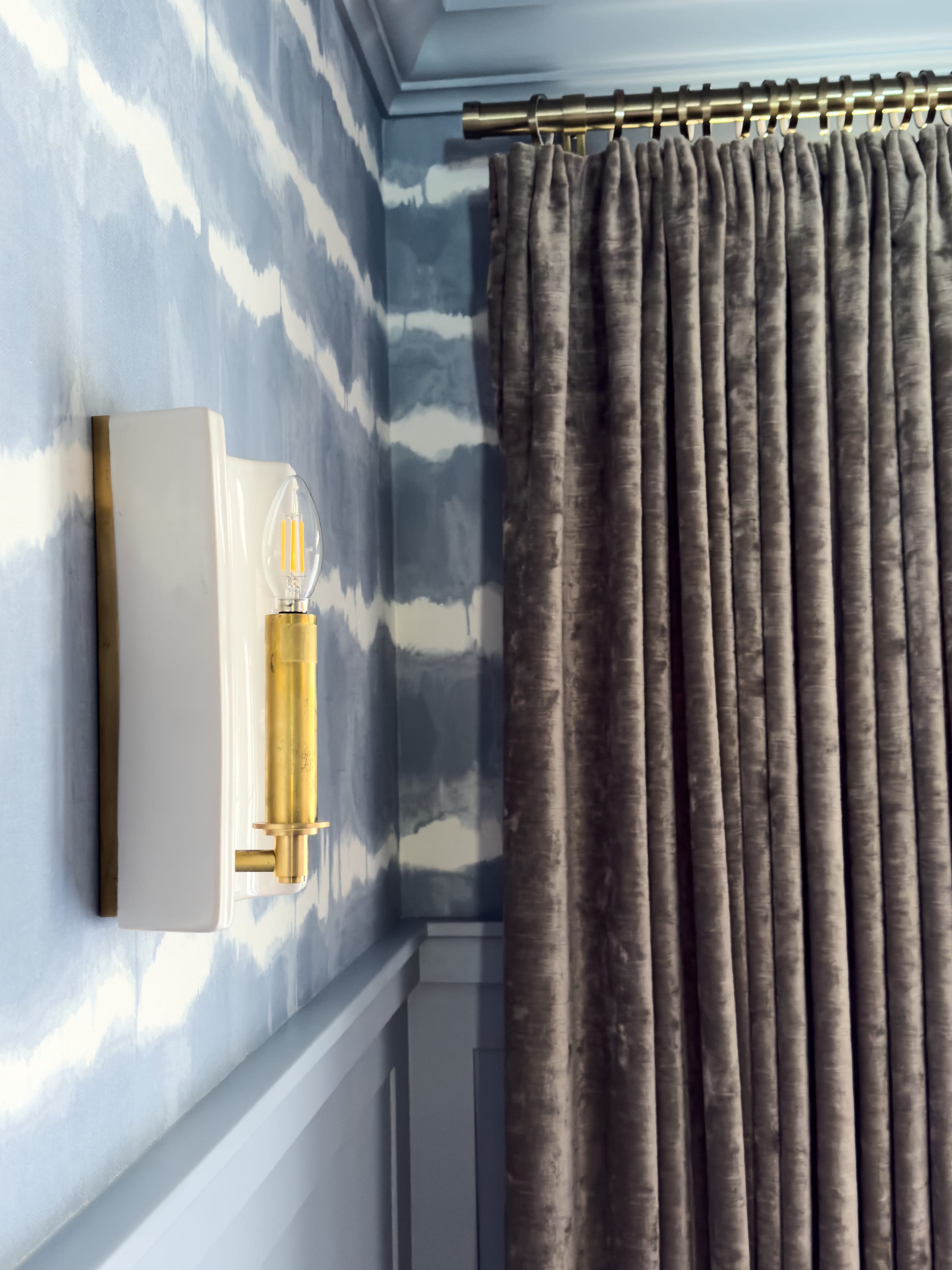
Custom drapery and roman shades are made to a specific window by a workroom, from measurements taken on site. A measurement taken from a plan rather than the finished opening is the single most common cause of a treatment that has to be remade.
The decisions that get made at that visit: mount height and width, which control how tall the room reads and how much glass stays uncovered when the drapery is open; lining, which is where blackout for bedrooms and interlining for weight and drape are specified; hardware, which is structural as well as visual on heavy panels; and whether anything is motorized, because that requires power at the window and needs to be coordinated with electrical before walls close.
That last point is why treatments belong in the construction conversation and not at the end of it. Deciding on motorized shades after the drywall is up is an expensive change.
Wallpaper: preparation is most of the job
A wallpaper installation is mostly wall preparation. Walls need to be smooth, primed and sound; paper installed over a poorly prepared wall telegraphs every flaw underneath and can fail at the seams. A good paperhanger will tell you what a wall needs before hanging anything, and that assessment is worth listening to.
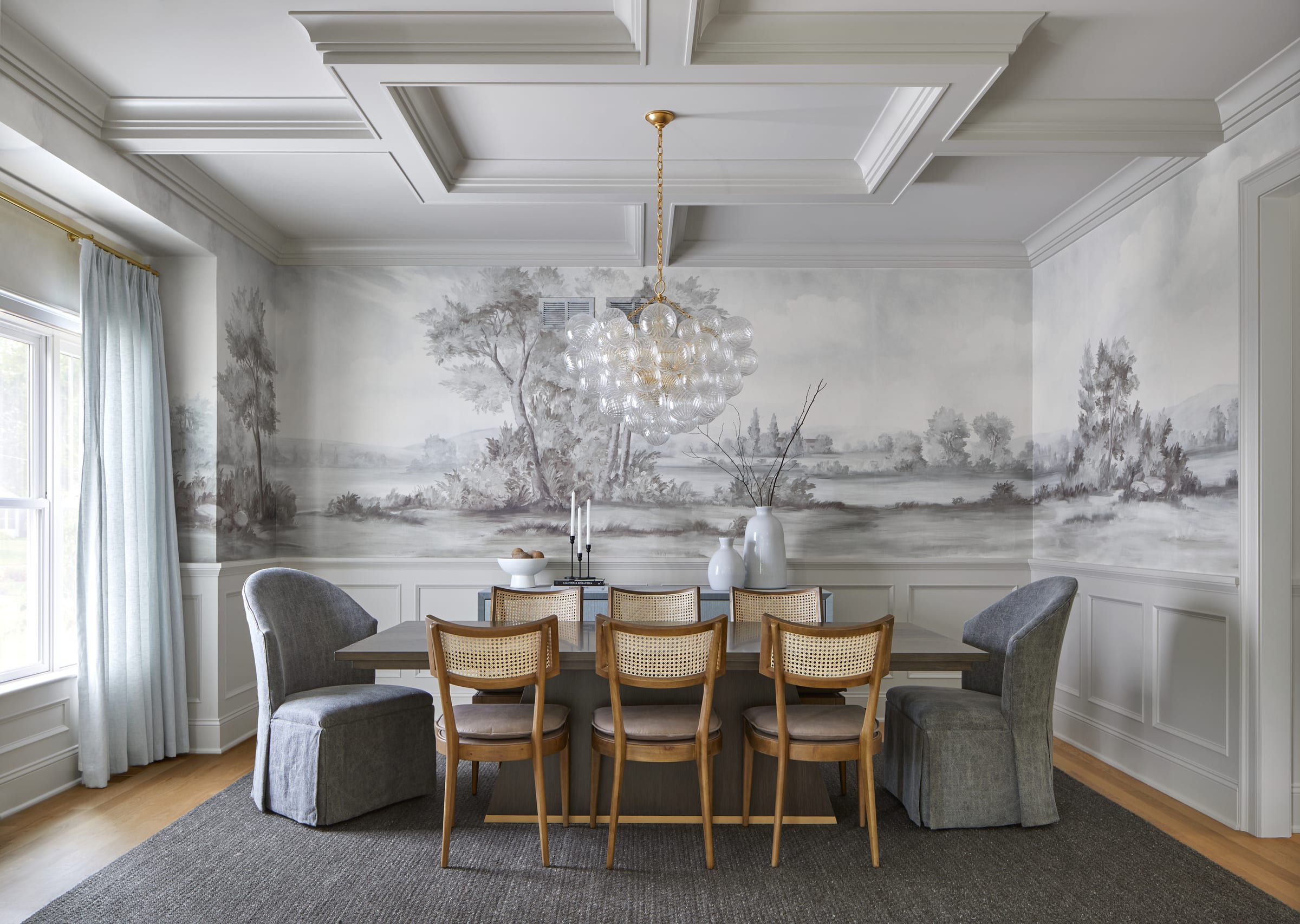
Pattern repeat drives quantity, which is why wallpaper is ordered with overage and why the same room can need noticeably different amounts depending on the paper. Order all of it from one dye lot at once — a later top-up order can arrive a shade off. Murals are a separate exercise again: they are paneled to a specific wall, so the wall has to be measured accurately and the panel layout planned around windows, doors and switch plates before anything is printed.
The mural in this Chatham dining room and the papered rooms in this Westfield house both work because the layout was planned against the actual wall rather than the drawing.
Why we specify and they install
We are not a workroom, and the workrooms and installers we use are not designers. That division is deliberate. Our job is to specify the right material, get the details correct on paper, and hold the schedule. Their job is precision work they do every day and do better than a generalist would.
What the studio adds is coordination — one point of contact holding the sequence together, so that the electrician knows about the motorized shade, the painter finishes before the paperhanger arrives, and the rug is on site before the furniture install rather than three weeks after it. Most of the failures in this category are scheduling failures rather than craft failures.
Planning your own sequence
The order that works: measure windows and order treatments early, because they are made to order and the workroom queue is real. Wallpaper after painting and before furniture. Rugs on site before the install day. Everything measured on the finished opening, never on the plan.
Rug and window-treatment ranges are on our furnishings pricing guide if you are building a budget. If you would rather have the whole sequence run for you, that is what full-service furnishings covers — start a project and we will take it from the measure.