

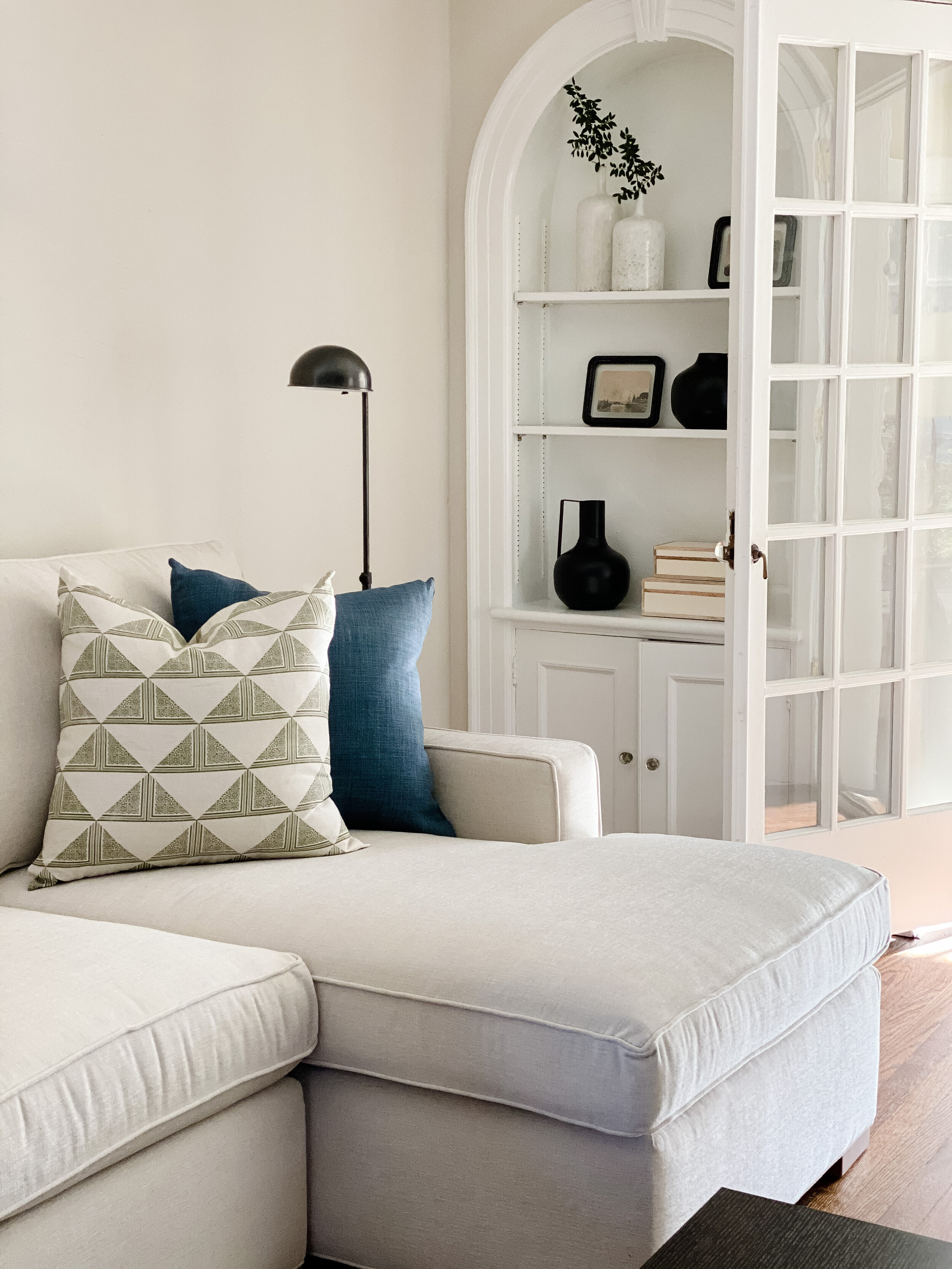
Modern traditional is a traditional house with the fuss taken out. The bones stay classic — the millwork, the paneled doors, the divided-light windows — and everything that moves gets simpler. Fewer patterns. Cleaner furniture. Warmer materials. One light fixture that plainly belongs to this century.
That is the formula, and it is the one we reach for most, because it is the one that keeps looking right. Architecture ages slowly. Furniture and lighting age quickly. Put the permanence in the walls and the personality in the things you can change, and a room stays current for a decade instead of eighteen months.
Why it suits the houses around here
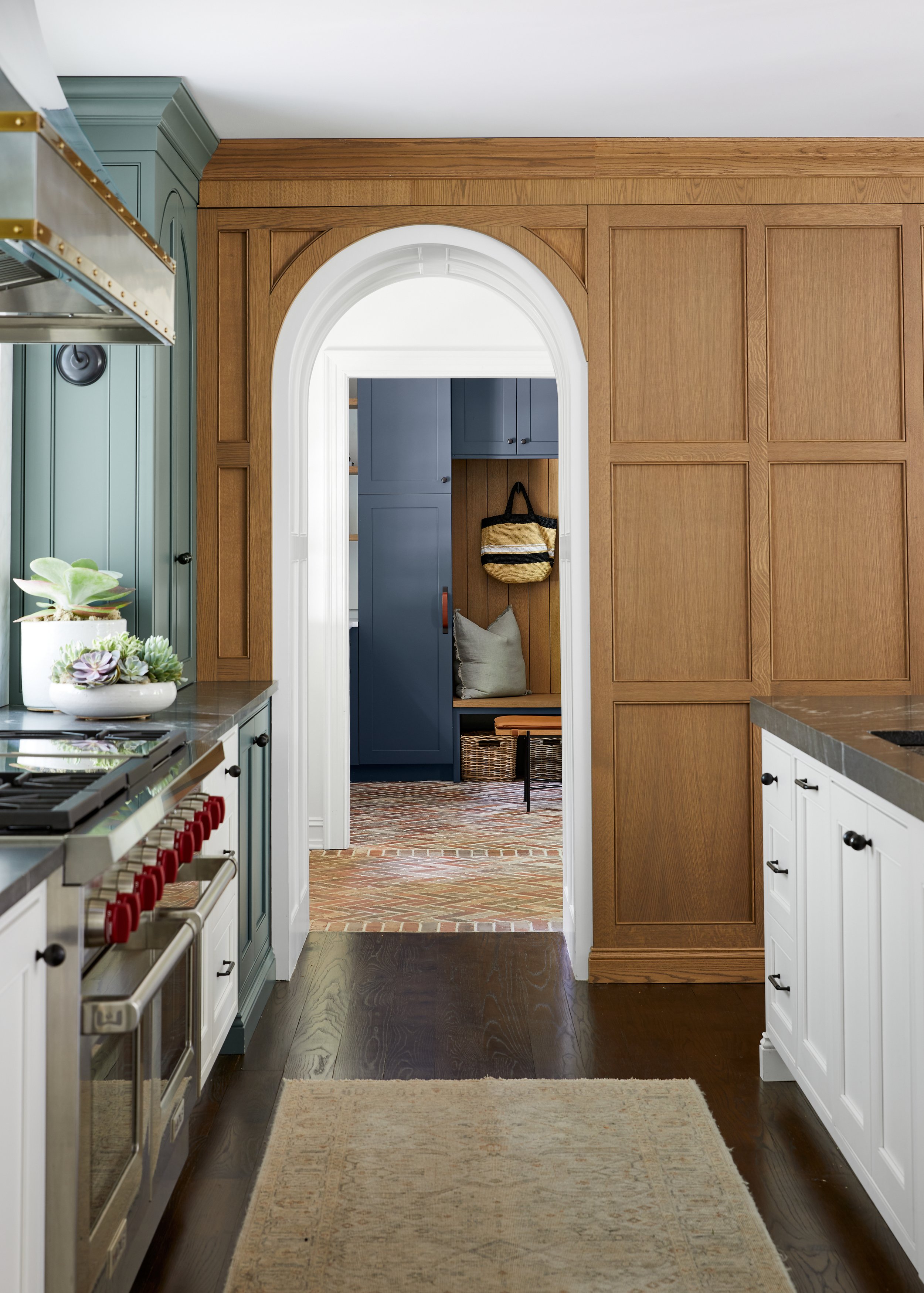
Union, Essex and Morris Counties are full of 1920s and 1930s colonials, Tudors and shingle-style houses, and they already came with the traditional half. The moldings are there. The arched openings are there. Somebody spent real money on the stair rail in 1929.
Working against that is expensive and rarely convincing. Strip a center-hall colonial in Westfield back to white boxes and it reads as a house with something missing, and the same goes for the older streets of Summit and Chatham. Modern traditional keeps what the house is good at and updates the layer you actually touch.
The moves that do the work
Keep the millwork and paint it quietly, usually within a shade or two of the walls, so the detail reads as texture rather than as a frame around everything. Simplify the furniture until the room has one generous curve and a lot of straight lines. Choose materials that improve rather than merely survive: white oak, honed marble, linen, unlacquered brass, plaster.
Then let the lighting carry the modern. A sculptural fixture in a plaster arch does more to date a house forward than any amount of furniture, and it is the cheapest thing in the room to change your mind about later.
Window treatments are the other quiet decision, and the one most often got wrong. Simple linen panels hung high and wide, or a woven shade on its own, keep a traditional window looking generous. Swags and valances pull the whole room back thirty years no matter what the furniture is doing.
Where the fresh part comes in
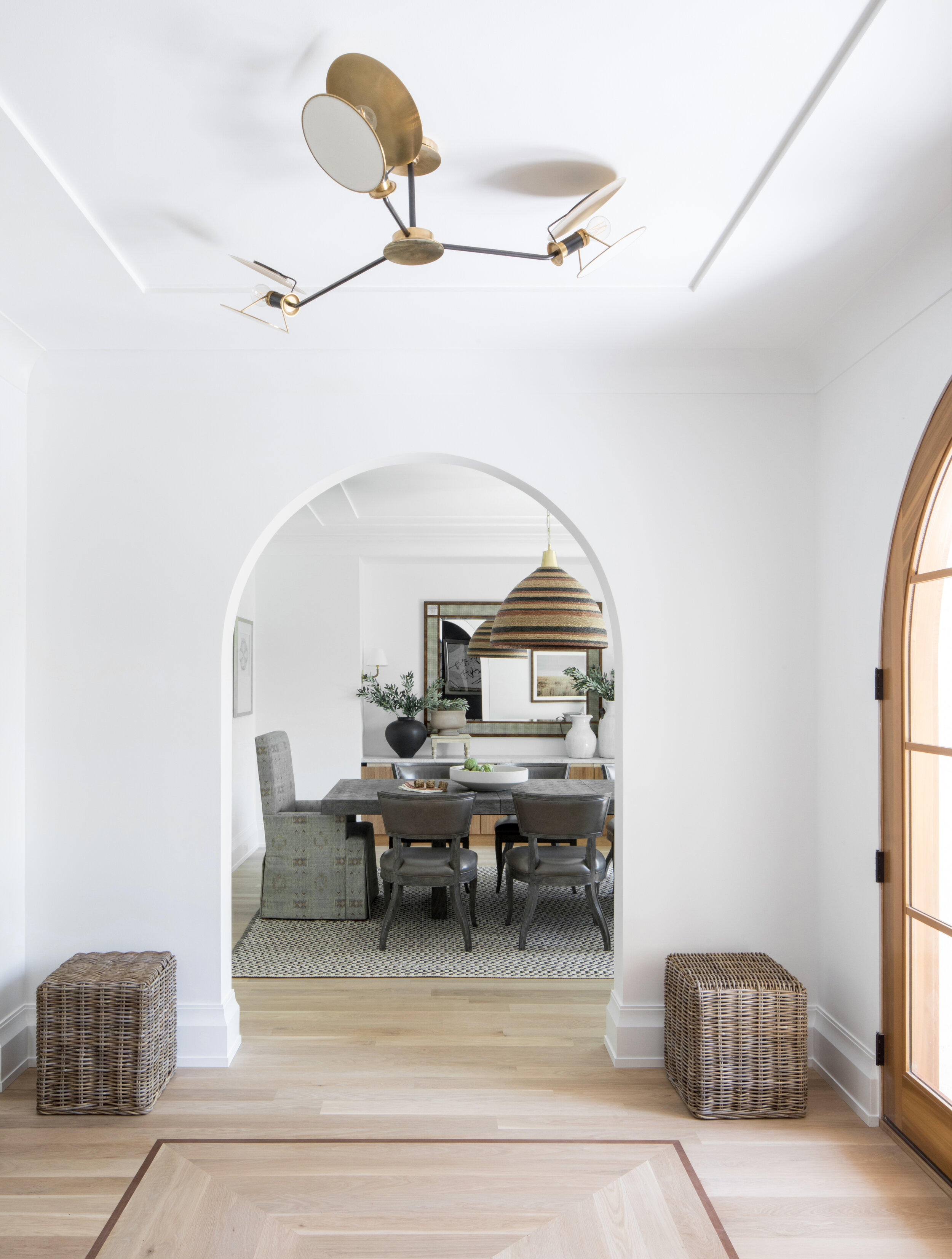
The unexpected thing is the point. Sage green cabinets and an arched oak passage in a house built in 1929. Black spindle chairs, which your grandmother would recognize, around a white oak table under a drum pendant she would not. Blue zellige tile in an upstairs bathroom that has otherwise been polite since the Coolidge administration.
One of those per room is plenty. Two starts to look like a decision was avoided.
Modern traditional, modern, and transitional
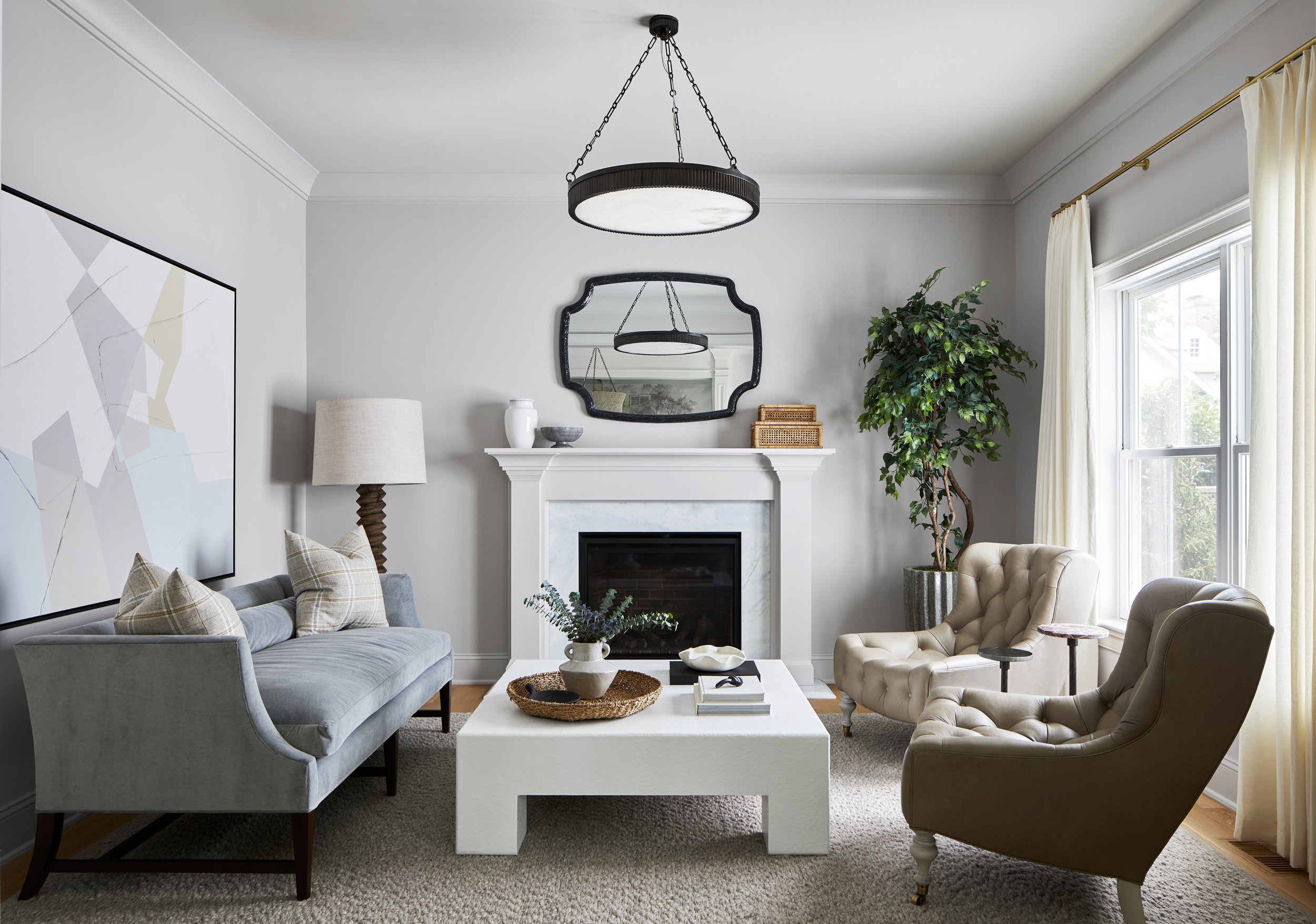
Modern proper is a specific twentieth-century movement — Bauhaus, Scandinavian, honest materials and visible structure — and a genuinely modern interior is a harder, colder discipline than most families want to live in. Transitional is the safe middle, and it often ends up reading as a room that declined to choose.
Modern traditional chooses. The architecture is traditional and unapologetic about it; the hand furnishing it is modern. Knowing which half is which is what keeps the room from turning into a catalog page.
Does it work in a house built last year?
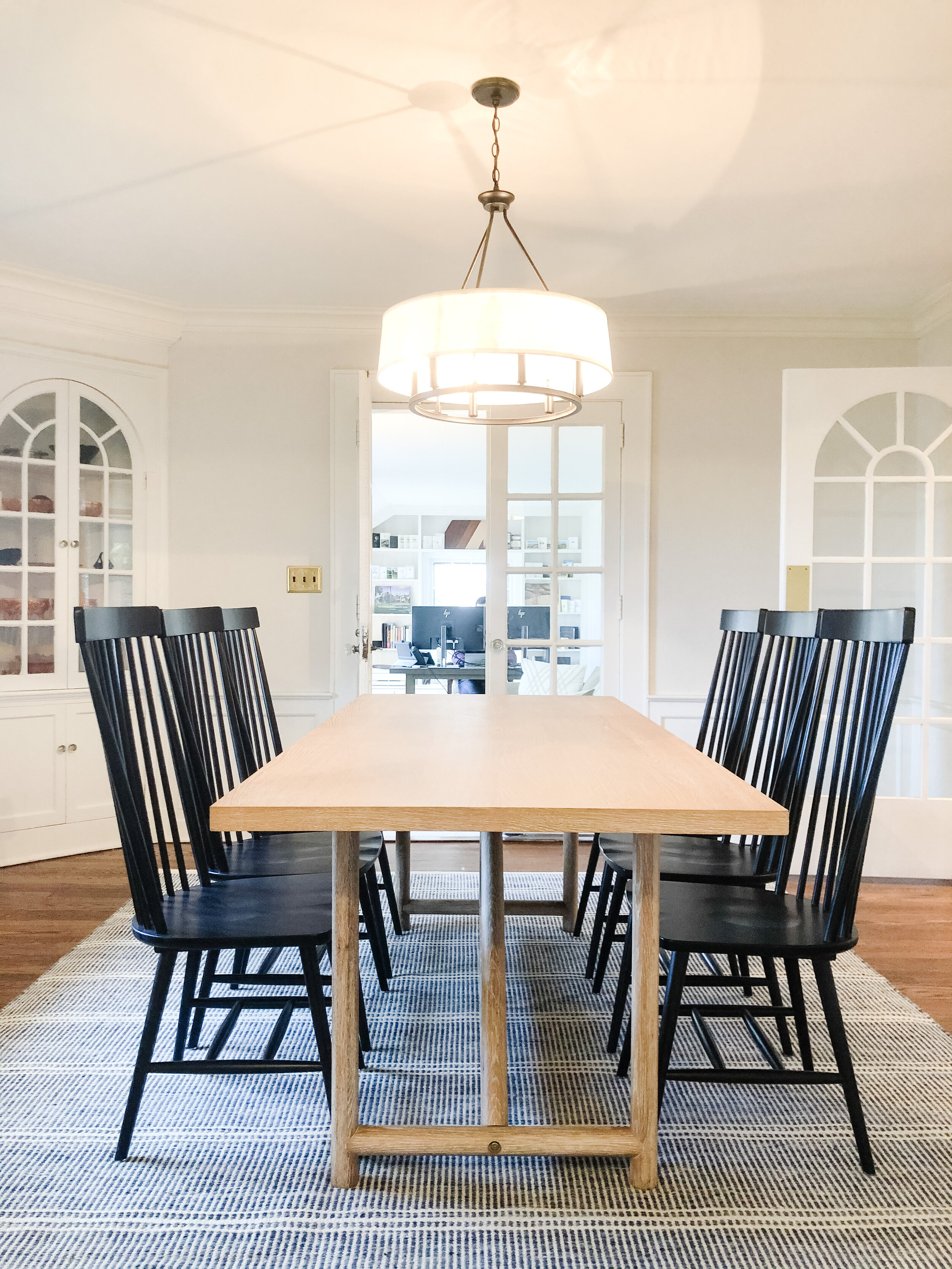
Often better, because a new house is where the traditional half has to be added on purpose. Paneling, a real casing profile, a fireplace surround with some weight to it, interior doors that are not hollow. Those are construction decisions, which is why we would rather be in the conversation before the drywall goes up.
None of it is expensive in the scheme of a build — it is millwork and doors, not marble — but it has to be settled early. Trim goes on before the painters, and nobody adds paneling later.
How to tell if it is your style
You like old houses but not the way they are usually dressed. You want a room your family can sit in without being careful. You would take one beautiful thing over five acceptable ones, and you would rather the house looked like it had been there a while, even if it hasn't.
If that sounds about right, the next question is which version of it is yours — which is what How do I know what my design style is? is for. Or see what the approach looks like across a whole house through full-service interior design, and then start a project. We have opinions. It is most of what you're hiring.